Service
Vinyl banners in New Jersey
Vinyl and mesh banners for grand openings, hiring, events and job-site fences, specified by material weight, edge finishing and wind exposure.
Lombardo Lettering makes vinyl and mesh banners for grand openings, hiring notices, events and job-site fences across eight New Jersey counties. Solid 13 oz or 18 oz vinyl suits walls, railings and two-sided displays; mesh lets wind through on fences and scaffolds. Check your town’s temporary-sign rules first, then call 973-214-2292 and ask for Frank.
What a vinyl banner is good for, from grand openings to job-site fences
A vinyl banner is a printed sheet of PVC-coated polyester fabric, finished at the edges so it can be tied, screwed or slid onto a pole. It suits a message that has to go up for a while and then come down: a store opening, a hiring push, a fundraiser, a seasonal sale, or the name of the contractor working behind a construction fence.
For small businesses and contractors in Morris County and the surrounding counties, the common uses fall into a few groups:
- Grand-opening and new-location banners on a storefront, railing or building face.
- Hiring banners at the road edge of a yard, shop or plant, where applicants drive past.
- Event and sponsorship banners for ball fields, fire company fundraisers, school fairs and church events, often hung on chain-link.
- Job-site banners on construction fencing or scaffolding that name the contractor and phone number while the work is underway.
- Promotional banners for a sale or a new service, rotated through the year.
- Indoor banners for trade-show tables, counters and showroom walls.
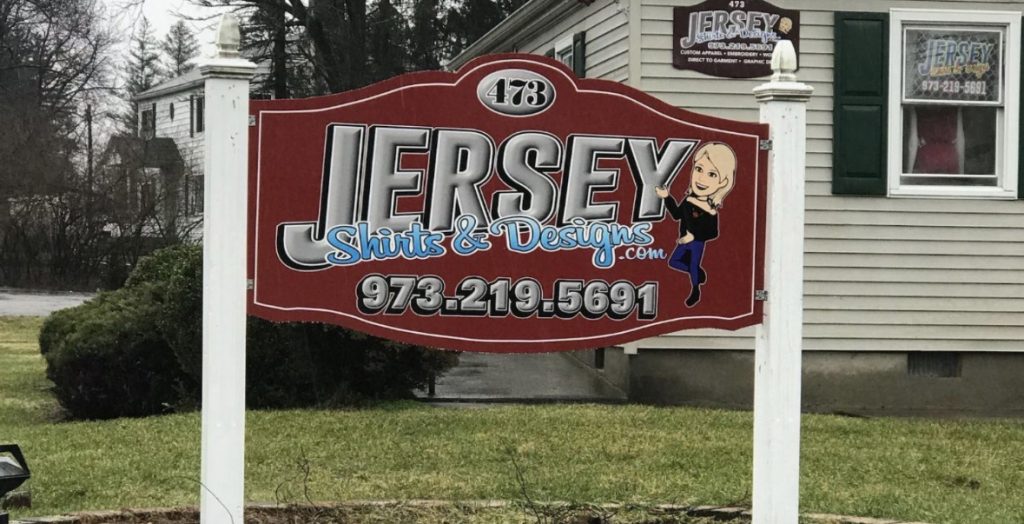
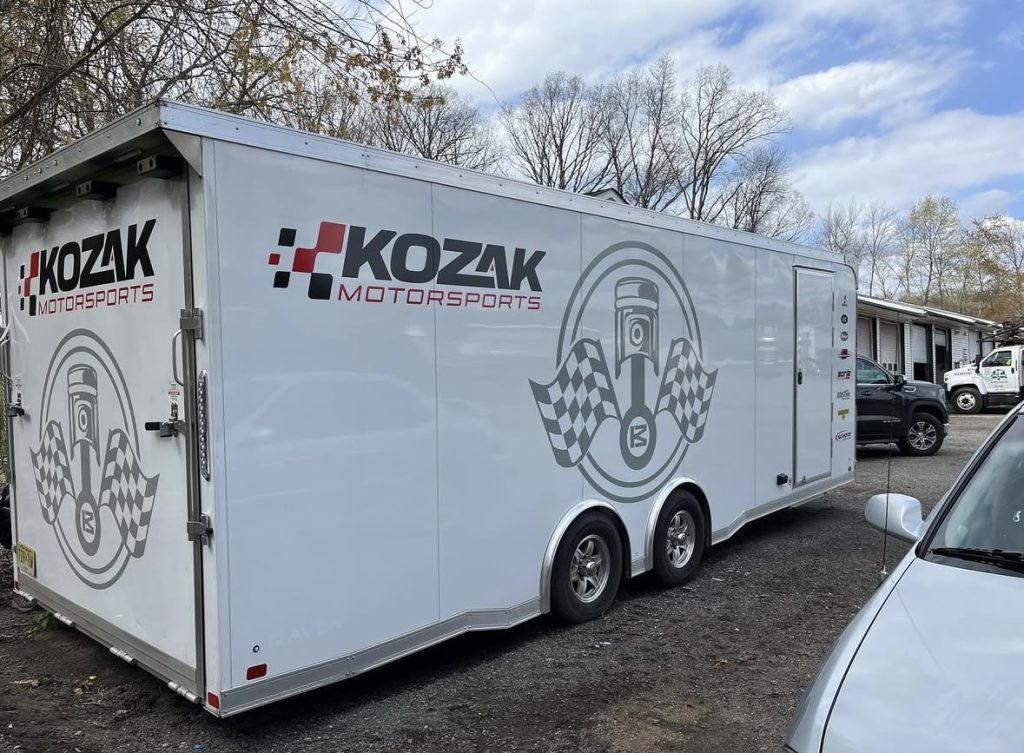
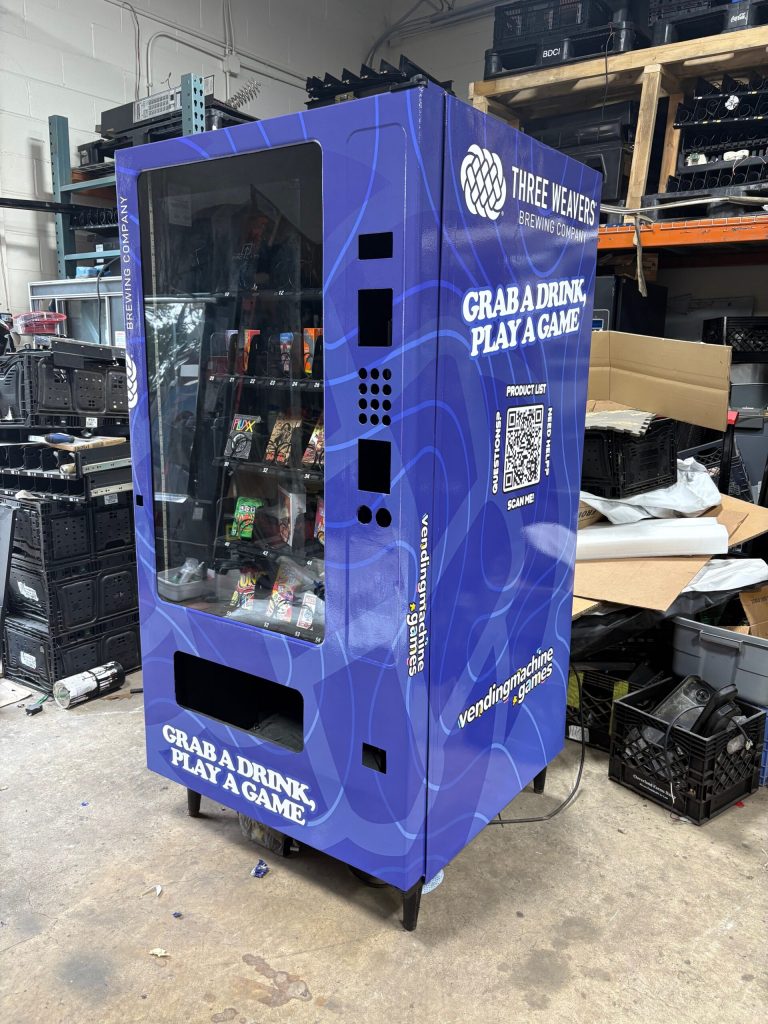
Recent banners work across New Jersey
Banner material weights compared: 13 oz, 18 oz blockout and mesh
“Heavy duty” is not a specification. Banner media is sold by weight per square yard, and manufacturers publish technical data sheets for each product. The figures below come from data sheets published by Ultraflex Systems, which lists its headquarters in Randolph, NJ. Other makers publish similar sheets, so ask for the data sheet of whatever material is quoted to you. Ultraflex notes on its sheets that the values are averages and are not a specification.
13 oz front-lit vinyl: the general outdoor banner
Ultraflex describes JetFlex FL as a premium 13 oz front-lit banner material: 13 oz/yd2 (440 g/m2), PVC-coated, on 1000 x 1000 denier high-tenacity polyester yarn. Its data sheet lists tensile strength of 155.65 x 130 lbs/in and tear strength of 25 x 34 lbs, no cracking down to -4°F (-20°C), NFPA 701 among its flame-resistance ratings, RF weldability and a fungus-resistant treatment. Its sister product, Ultima Pro 13oz FL Matte, has the same weight and yarn count but lists tensile strength of 228.40 x 205.56 lbs/in, and Ultraflex calls it ideal for outdoor banner and truck-side applications. Two materials sold as “13 oz” can differ a lot in strength, which is why the data sheet matters more than the label.
18 oz blockout vinyl: for banners read from both sides
A banner hung across an entrance or over a walkway is seen from both directions, so it needs a material made for printing on both faces. Ultraflex’s Outdoor Blockout LTX is an 18 oz/yd2 (610 gsm) blockout banner material that the maker says is designed for two-sided applications, with a matte finish on both sides. Its data sheet lists tensile strength of 302.36 x 228.40 lbs/in, NFPA 701 flame resistance, no cracking down to -4°F (-20°C), RF weldability and fungus resistance. The extra weight also makes for a heavier banner to hang.
Mesh: for fences, scaffolds and windy spans
Mesh is PVC-coated polyester with open holes in the weave. Ultraflex’s UltraMesh Xcel is a 7 oz/yd2 (240 g/m2) mesh that allows 30% air flow through, is printable on two sides, and is rated not to crack down to -22°F (-30°C). The maker lists building, stadium and fence wraps, banners and protective barriers for scaffolding among the uses it is suited for.
Hems, grommets, pole pockets and rope: how a banner is finished for hanging
The edge finishing is what spreads the pull of a tie or a gust along the banner instead of concentrating it at one hole.
A hem folds the edge back on itself and seals it, doubling the material where the hardware goes. The Ultraflex sheets list each of the materials above as RF weldable (heat sealable), so a hem can be welded rather than relying on stitching alone. Grommets are then set through that doubled edge.
- Grommet sizes: grommet maker Stimpson sells self-piercing grommets for signs and banners in trade sizes #0 (1/4-inch hole), #1 and #1XL (5/16-inch), #2 and 2XL (3/8-inch) and #3 (7/16-inch). They come in plain brass and in nickel and dull black oxide finishes, and select sizes are offered in 304 stainless steel.
- XL-length grommets: Stimpson’s XL-length grommets add 3/10 of an inch of length for materials up to 1/2 inch thick, including vinyl and woven polyester. The 2XL has a 3/8-inch hole and a .750-inch flange. The company says the extra length prevents accidental compression and damage to the material, which is useful on a doubled hem.
- Grommet spacing: closer spacing shares the load among more ties, which suits a fence or a windy railing. A banner hung indoors or flat against a wall needs fewer.
- Pole pockets: a sleeve sewn or welded along the top and bottom edges, for banners slid onto poles, light-post brackets or a stand.
- Rope hems: a rope sealed inside the hem, for long banners stretched between two points, so the tension runs through the rope.
Wind load on fence and scaffold banners
A solid vinyl banner on a chain-link fence catches the wind much like a sail, and that pull goes into the grommets, the ties and the fence posts.
There are three common ways to reduce that load. Mesh lets part of the wind through; Ultraflex rates UltraMesh Xcel at 30% air flow. Wind slits, short half-moon cuts in solid vinyl, let some air pass at the cost of small flaps in the image. More tie points, set through a hemmed edge, spread whatever load remains. For construction fence and ball-field fence banners, mesh tied at every grommet is the straightforward choice.
Scaffolds add a safety question. OSHA’s scaffold rule, 29 CFR 1926.451(f)(12), prohibits work on or from scaffolds during storms or high winds unless a competent person has determined it is safe and the workers are protected by a personal fall arrest system or wind screens. A scaffold banner should be planned with the site supervisor, not just tied on.
A contractor with a fence banner on site usually wants the trucks parked beside it to carry the same name and number; see fleet lettering for keeping several vehicles consistent.
Laying out a banner people read from a moving car
A banner is often read once, briefly, by someone driving past, and that should shape the layout. One message per banner works: “Now Hiring CDL Drivers” with a phone number, or “Grand Opening Saturday” with the business name. A full list of services belongs on the website, not the banner.
A few habits that hold up on banners specifically:
- Match the shape to the mount. A long, low banner suits a fence or railing; a taller one suits a wall or a pair of poles. Decide where it will hang before the layout starts.
- Keep dates and offers on a separate panel or a separate banner, so the main banner with your name can be reused next season.
- Leave the edges clear. Hems and grommets take up the outer margin, so no text or phone digit should run into it.
- Use the same logo and colors as your truck, shirts and permanent sign. Our graphic design service covers logo work.
- For a banner seen from both sides, decide whether both faces carry the same message before choosing between blockout vinyl and mesh.
Why Lombardo
Banners, done at your yard
We bring the shop to you, so your vehicle keeps working while we do the job. Call Frank for a straight answer, or send a photo and we will reply with a price.
- Talk to Frank directly — most quotes take one phone call
- Priced from a photo of your vehicle or space
- Three generations of sign work, since 1940
Town permits and state highway rules for temporary banners in New Jersey
Banner rules are set town by town, and they vary. The examples below come from New Jersey municipalities’ own published forms and ordinances. They show the range; they are not a substitute for calling your own zoning office before you hang anything.
Our service areas page lists the counties and towns we cover.
- Hackettstown (Warren County): the town’s sign permit application says a grand-opening banner needs no permit if the business is an approved use with a Zoning Permit. It is permitted for 90 consecutive days, with a maximum of three pennants and 25 square feet, attached to the building or associated railings or wall. Promotional banners need a permit ($20 for 12 square feet or less, $35 for 25 square feet or less), are permitted 90 calendar days in any calendar year, and are limited to one banner per promotion.
- Morristown (Morris County): Ordinance O-42-2018 lists “Banners, except as a temporary sign” among prohibited signs. The Construction Official issues permits for temporary outdoor signs only after the Zoning Officer has reviewed and approved the sign permit application.
- Middlesex Borough (Middlesex County), for contrast: its temporary banner application carries a $50 fee and allows one banner per business, up to 36 square feet, for a grand opening or special sales event, for up to 30 days. A sale banner must come down for at least 15 days before a new one goes up, sale banners are limited to eight events per year, and the application is due at least 10 days before the banner goes up.
Keep banners out of the state highway right-of-way
N.J.A.C. 16:41C-4.1(c) says that, except where specifically authorized by the Department, no sign shall be erected or maintained within NJDOT’s right-of-way of any limited-access or non-limited-access highway in New Jersey, and N.J.A.C. 16:41C-6.1(a) requires a permit from the Department for each sign unless the chapter exempts it. In a July 19, 2019 final decision, NJDOT upheld violations against two Manchester facilities whose signs stood in its Route 70 right-of-way without a permit. If your property fronts a state highway, find out where the right-of-way ends before you hang a banner near the road; mounting it on the building avoids the question.
Cleaning, rolling and storing a banner between uses
A banner you plan to reuse, such as an annual fundraiser banner or a hiring banner that goes up every spring, should be handled like a sign face rather than a tarp. 3M’s product bulletin for Panagraphics III, a flexible sign-face substrate made of white vinyl with a polyester scrim, gives care advice that carries over to banner vinyl, even though that product is not itself a hemmed banner.
- Clean with only a mild detergent and water. 3M recommends cleaning annually, or more often in unusually dirty locations.
- Roll it rather than folding it. 3M says not to stress the decorated substrate by folding, crimping or creasing it, and to roll finished graphics with the graphics facing out.
- Use a core. For rolling a finished sign face, 3M calls for a core at least 3 inches in diameter for a single film layer and at least 6 inches for multiple layers.
- Do not secure the roll with masking tape. 3M warns that it may stain the substrate.
- Handle it gently in the cold. 3M notes that in cooler temperatures applied films become less flexible and may crack if handled roughly, so a banner taken down on a January morning is better rolled loosely and re-rolled once it warms up.
- Store it dry, away from anything that can puncture the roll.
Choosing between a banner, a permanent sign and vehicle lettering, and getting a quote
A banner fits a message with an end date: an opening, a sale, a season, a job. If the same banner has been up for most of a year, a permanent custom sign or window lettering may serve the business better and avoids temporary-sign time limits. If the message needs to travel with you, it belongs on the truck; see truck lettering or a vehicle wrap. Lombardo will not upsell a full wrap when lettering would do.
Lombardo Lettering is a family-owned business founded in 1940 by Frank Lombardo Sr., an army veteran who painted signs, pinstripes and murals. Frank Lombardo Jr. took over and moved the business into cut vinyl, printed wraps and adhesive graphics, and his son Tristan works alongside him. The shop is at 95 W Main St in Chester, off Route 206 and Route 24, with visits by appointment, and the team serves Morris, Essex, Warren, Union, Bergen, Somerset, Sussex and Hunterdon counties.
To get a quote, have these ready:
- Where the banner will hang (fence, wall, railing, poles, scaffold, indoors) and roughly how big the space is.
- Whether it is seen from one side or both.
- The wording, any logo files, and whether the dates should be separate so the banner can be reused.
- Whether your town requires a permit and has a size limit.
- Call 973-214-2292 and ask for Frank, email franksignguy@yahoo.com, or use the quote form.
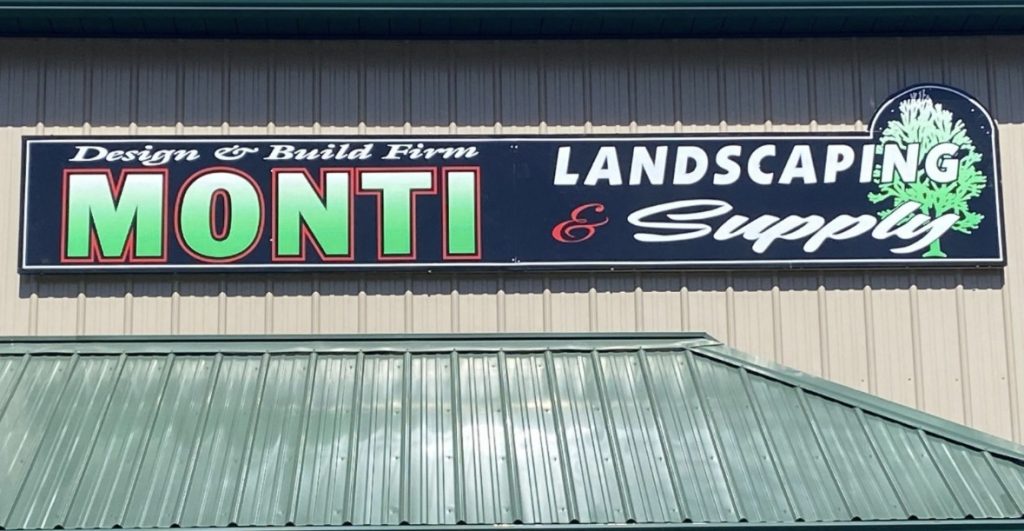
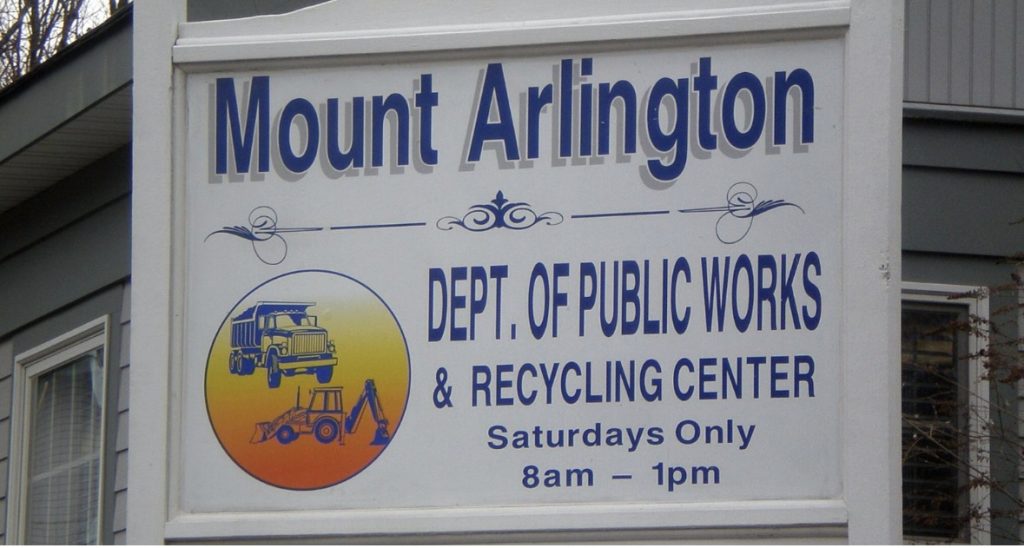
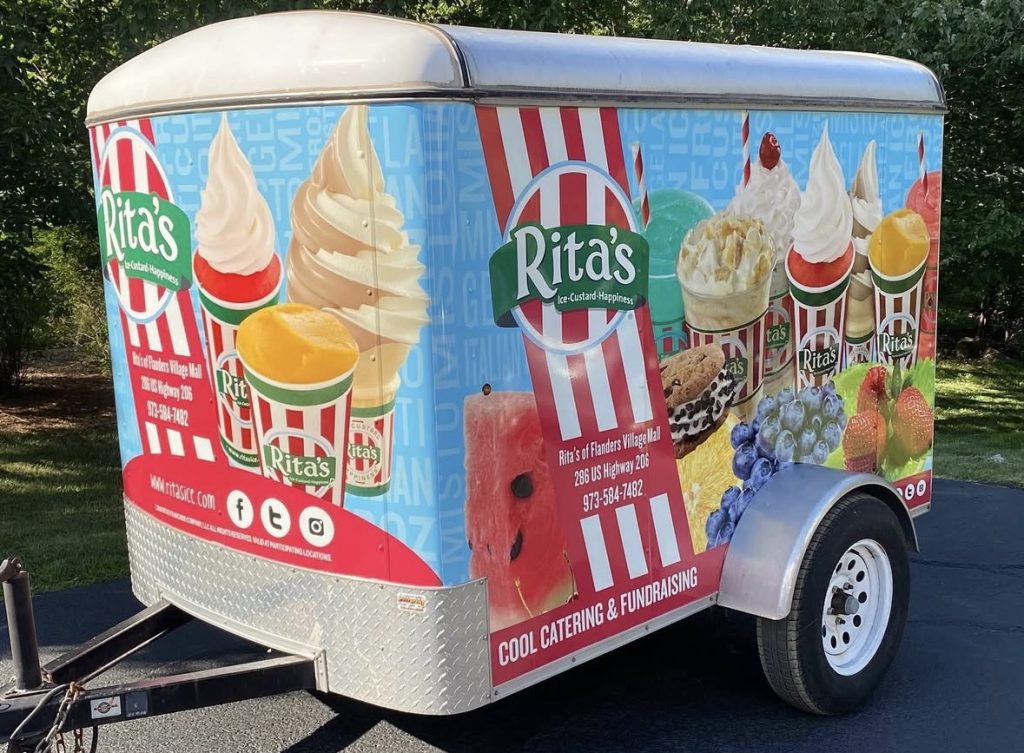
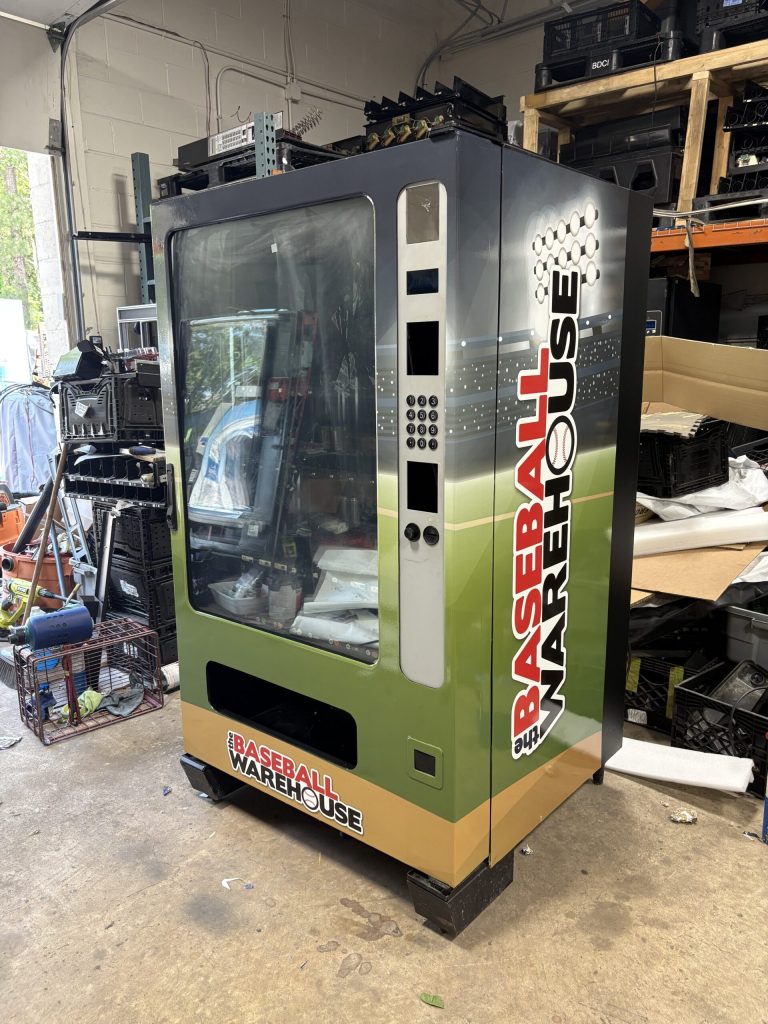
Our work, up close
Banners — questions we get asked
What is the difference between a 13 oz and an 18 oz banner?
Weight per square yard, and what the material is built for. Ultraflex’s JetFlex FL is a 13 oz/yd2 (440 g/m2) front-lit banner material. Its Outdoor Blockout LTX is 18 oz/yd2 (610 gsm), is designed for two-sided applications, and lists higher tensile strength. Use 13 oz for most single-sided outdoor banners and 18 oz blockout when people read the banner from both directions.
Should a banner on a chain-link fence be mesh?
Usually, yes. A solid banner on a fence catches wind and pulls on every grommet and tie. Ultraflex rates its UltraMesh Xcel at 30% air flow and lists fence wraps and protective scaffolding barriers among its uses. Tie the banner at every grommet. Solid vinyl with wind slits is an alternative when the image needs to be fully solid.
Do I need a permit to hang a grand-opening banner in New Jersey?
It depends on the town. Hackettstown allows a grand-opening banner of up to 25 square feet for 90 consecutive days with no permit if the business has a Zoning Permit. Middlesex Borough charges $50 and allows 30 days. Morristown issues temporary sign permits only after zoning review. Call your municipal zoning office before you hang anything.
Can I hang a banner by the road in front of my business on a state highway?
Not in the state right-of-way. N.J.A.C. 16:41C-4.1(c) bars signs within NJDOT’s right-of-way unless the Department specifically authorizes them, and in 2019 NJDOT upheld violations against signs in its Route 70 right-of-way. Find out where the right-of-way line is, and mount the banner on your building or inside your property.
What size grommets go in a banner?
Grommets come in numbered trade sizes. Stimpson sells self-piercing grommets from #0, with a 1/4-inch hole, to #3, with a 7/16-inch hole. Its 2XL has a 3/8-inch hole, a .750-inch flange and extra length for materials up to 1/2 inch thick, which Stimpson says prevents accidental compression of the material. That helps on a doubled, welded hem.
How do I store a banner so I can use it again next year?
Clean it with mild detergent and water, let it dry, and roll it with the printed side facing out on a core. 3M’s guidance for flexible vinyl sign faces says not to fold, crimp or crease the material and not to secure the roll with masking tape, which may stain. Store it somewhere dry where nothing can puncture the roll.
Can a banner be printed on both sides?
Yes, with a material made for it. Ultraflex says its 18 oz Outdoor Blockout LTX is designed for two-sided applications, with a matte finish on both sides. Its UltraMesh Xcel mesh is also printable on two sides. Single-sided front-lit vinyl such as 13 oz JetFlex FL is the usual choice when the banner is read from one side only.
When should I get a permanent sign instead of a banner?
When the message has no end date. Banners suit openings, sales, events, hiring and job sites, and many towns limit how long a temporary banner can stay up; Hackettstown, for example, allows promotional banners 90 days a year. For a message that stays, a permanent custom sign or window lettering is the better fit.
Ready for a quote?
Call 973-214-2292 and talk to Frank directly.
Areas we serve across New Jersey
Eight counties. Pick yours to see the towns we cover. Mobile truck lettering, wraps and signs — we come to your yard.
Find us in Chester, NJ
Our shop is at 95 W Main Street, Chester, New Jersey 07930 — but for lettering and wraps, we come to you.
Our mobile service area
Eight counties across northern and western New Jersey, covered by our own trucks.