Service
Vehicle wraps in New Jersey
Printed partial and full wraps for trucks, vans, box bodies and trailers, proofed on your actual vehicle and installed at your yard or job site.
A vehicle wrap is printed cast vinyl, sealed under a clear overlaminate, that covers part or all of a vehicle’s body. A partial wrap covers selected panels and lets the paint show; a full wrap covers every painted panel. Lombardo Lettering designs, proofs and installs wraps at your yard or job site across eight New Jersey counties.
Partial, three-quarter and full wraps compared
Coverage is the first decision, and it drives most of the others. A partial wrap prints graphics onto selected panels, usually the rear half of a van, the sides of a box body or a band across a pickup’s bed, and lets the factory paint act as the background. A three-quarter wrap covers most of the body but leaves areas such as the hood, roof or front bumper in paint. A full wrap covers every painted panel, so the whole vehicle carries your color and imagery.
The practical difference is how much film has to be stretched. Flat panels and sides are straightforward. Bumpers, mirror caps, door handles and the deep recesses around tail lamps are where film is stretched hardest, and 3M’s application guide treats these as the surfaces that need heat, relief cuts and post-heating. A partial wrap that keeps to the flatter panels avoids most of that work.
If all you need is a name, phone number and license line, you do not need a wrap at all. Lombardo will not sell you a full wrap when cut truck lettering does the job; that page covers how cut lettering works and how it differs from printed graphics.
- Partial wrap: printed graphics on chosen panels, factory paint as the background color.
- Three-quarter wrap: most of the body covered, with selected panels left in paint.
- Full wrap: all painted surfaces covered, for full-color imagery or a complete color change.
- Color-change wrap: a full wrap in a solid or specialty film instead of printed artwork.
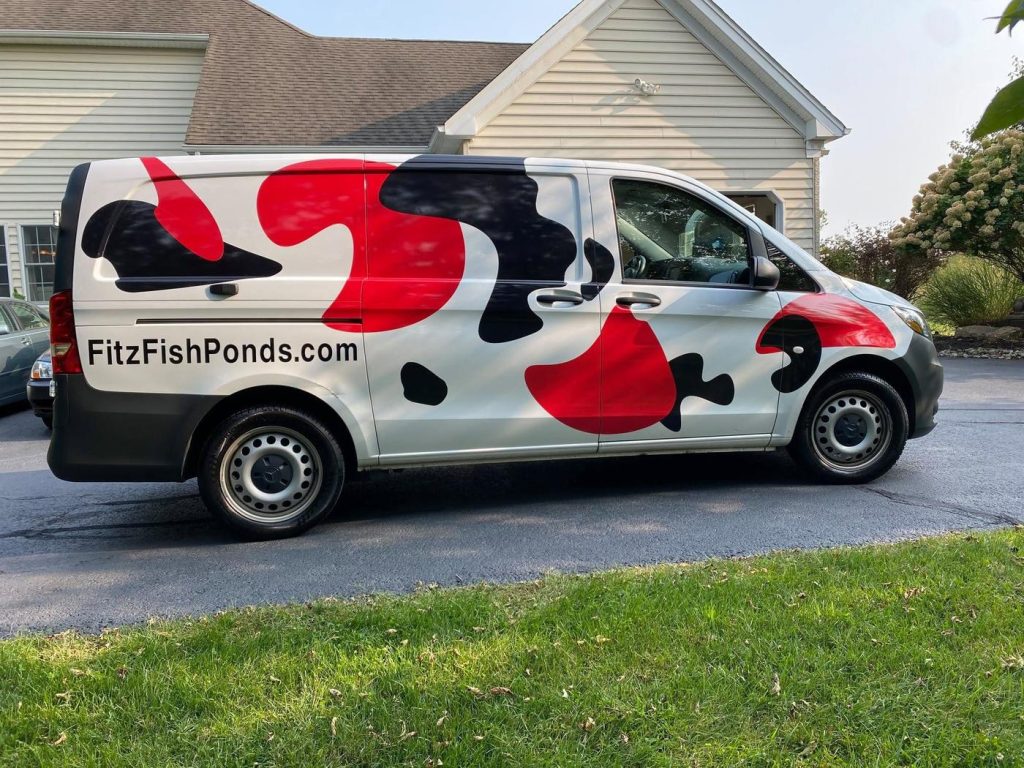
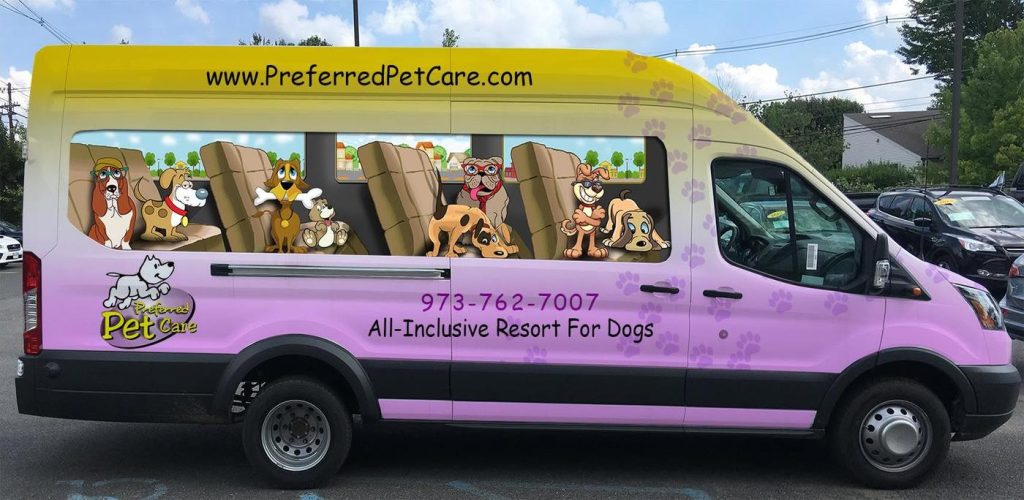
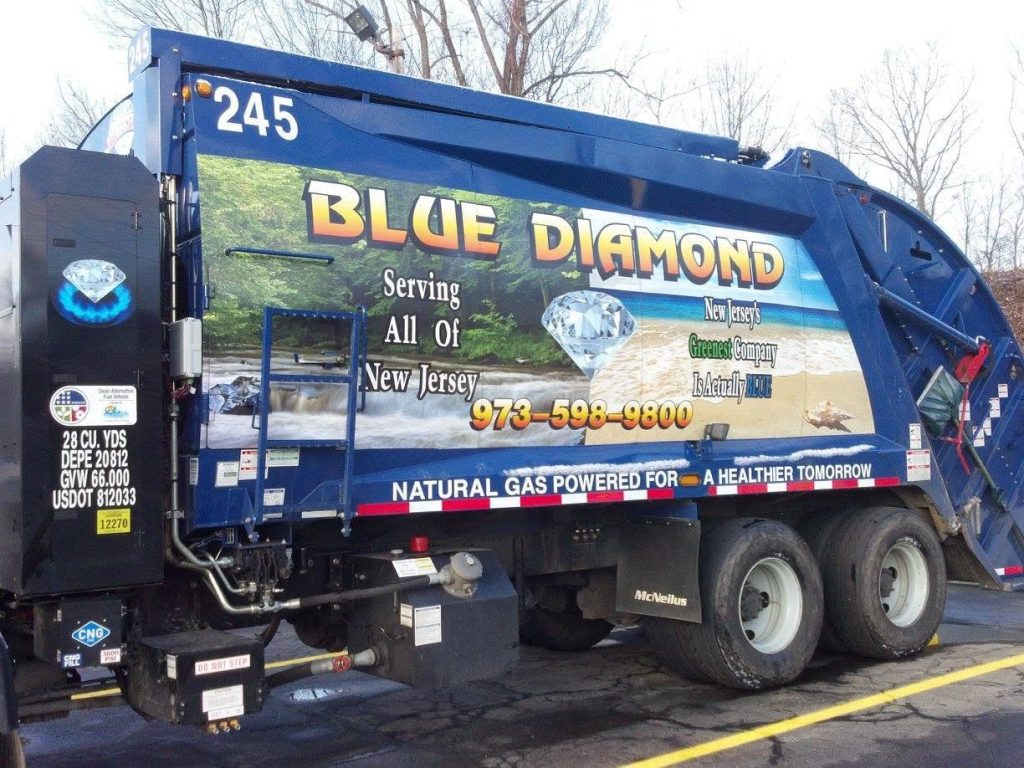
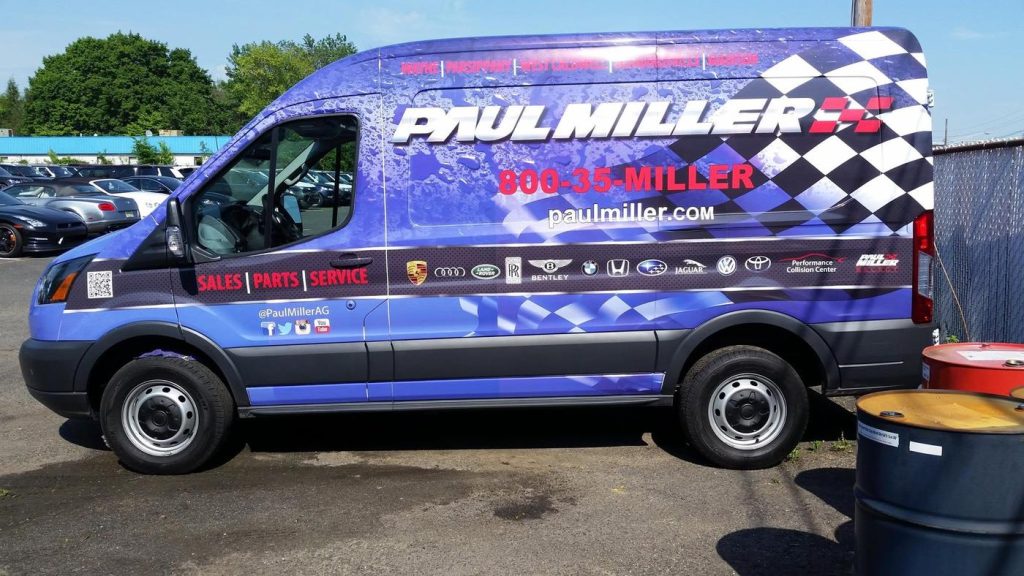
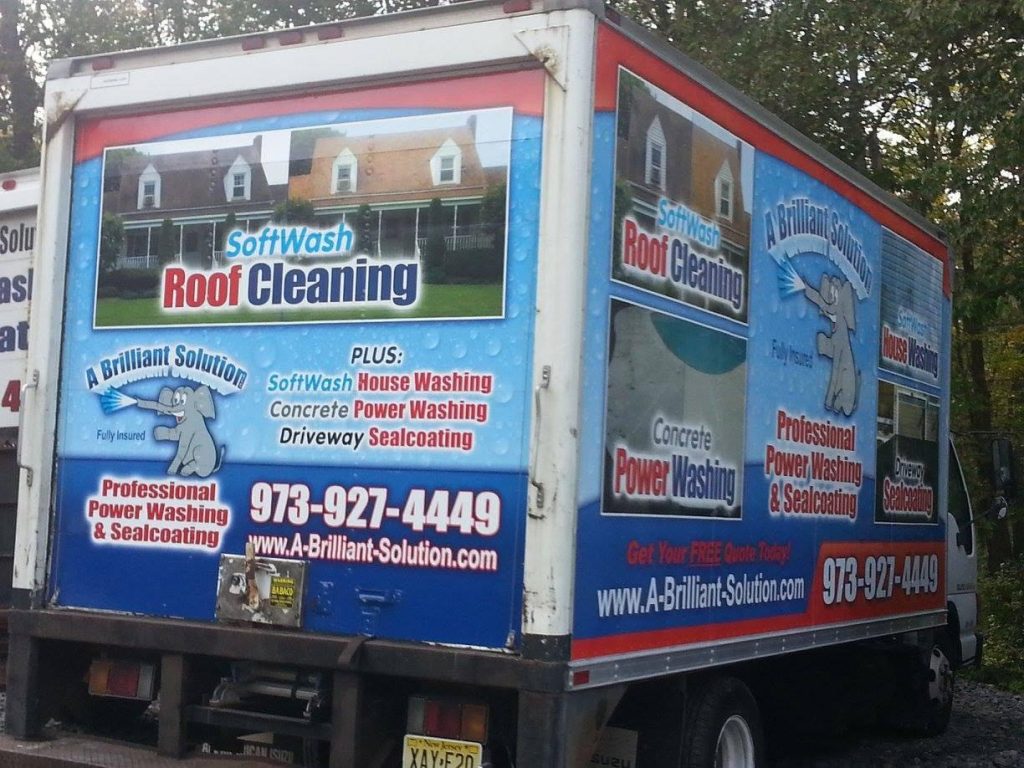
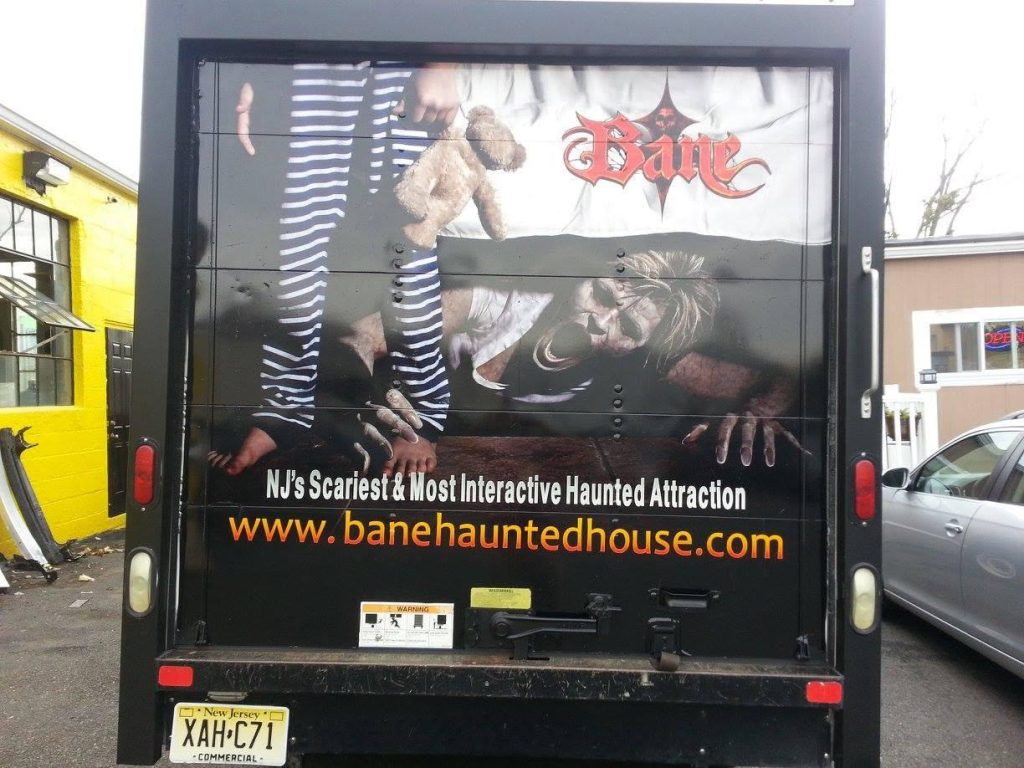
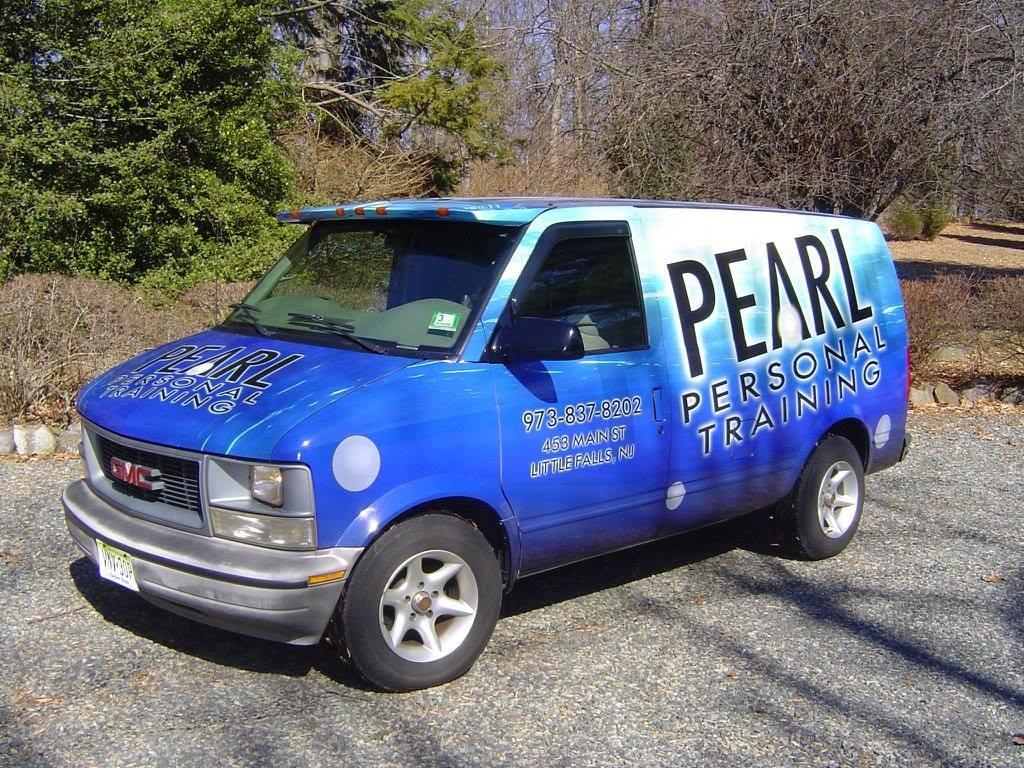
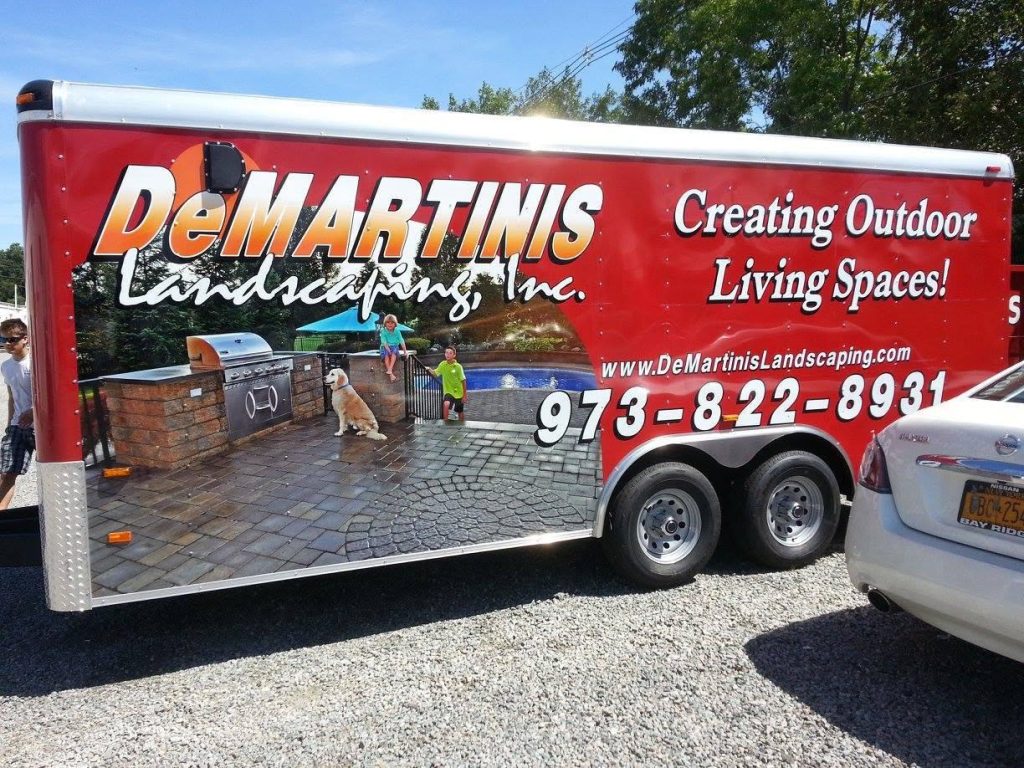
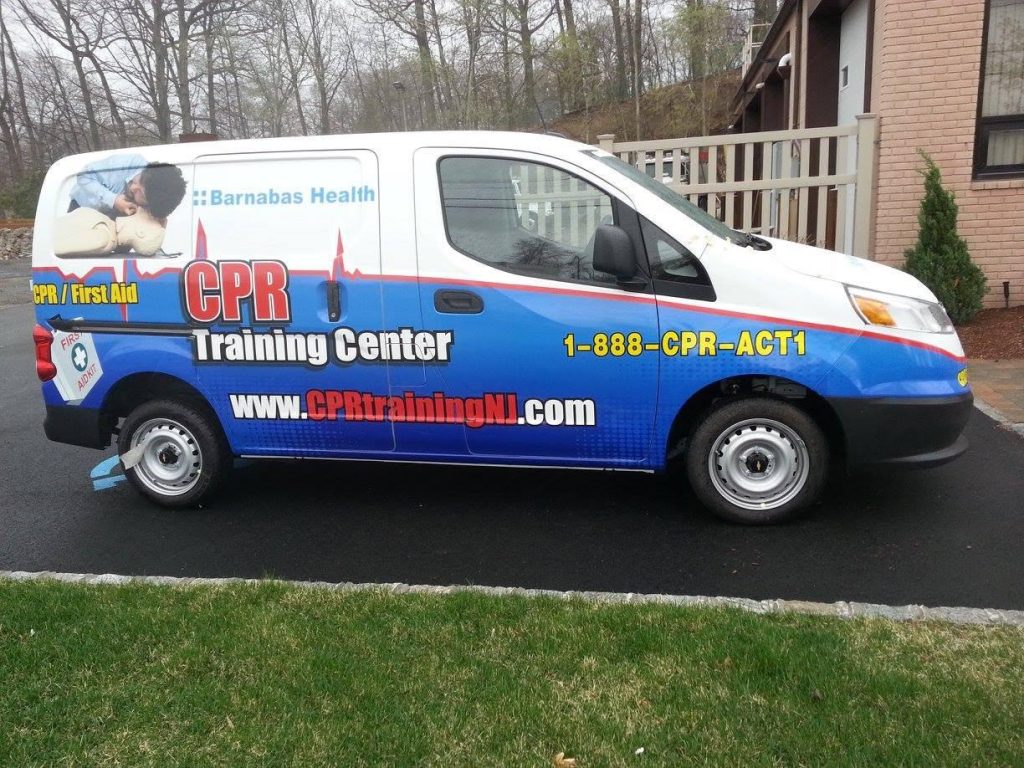
Recent vehicle wraps work across New Jersey
Printed cast wrap film and overlaminate work as one system
A printed wrap has two layers: a base film that carries the ink and the adhesive, and a clear overlaminate applied on top. Avery Dennison’s datasheet for its MPI 1105 wrapping film recommends an overlaminate to enhance color and to protect images against UV radiation and abrasion. Without the laminate, the ink is the outermost layer and takes every car wash brush, sun exposure and scrape directly.
Wrap films are cast films built for stretching. 3M describes its IJ180mC print wrap film as a cast vinyl 0.05 mm thick without adhesive, recommended for wraps on vehicles, straight trucks, semi-trucks and semi-trailers, and for bus graphics. Avery lists 200% elongation for its 50-micron MPI 1105 cast film, and ORAFOL describes ORAJET 3951RA as a 2-mil cast PVC film for commercial vehicle and fleet wraps. Lombardo installs premium cast films from Avery, 3M or ORAFOL and does not use cheap calendered vinyl.
Air-release adhesives
Modern wrap films are made to let trapped air escape during installation. 3M’s IJ180mC uses Comply, which lets air exit through release channels to the edge of the graphic, and Controltac, which minimizes initial adhesive contact so a panel can be slid and repositioned before it is pressed down. ORAFOL’s 3951RA uses RapidAir, which it describes as an air-dispersing adhesive that lets installers reposition the material. Avery sells MPI 1105 in an Easy Apply RS version for faster, easier installation.
Ink and laminate choices limit how far a printed wrap can stretch
3M grades every part of a printed graphic for conformability: the film, the ink and the protective laminate. Cast film printed with most solvent inkjet inks sits in its top Excellent category, while UV-cured inks and clears are flagged as heat-sensitive and may crack if too much heat is used on complex curves and deep contours. 3M’s rule is that a graphic built from parts in different categories must be installed within the limits of the lower one. In other words, a wrap is only as conformable as its weakest layer, so the ink and laminate matter as much as the film’s brand name.
Wrapping over rivets, corrugations, compound curves and recesses
Box trucks and trailers are covered in rivets and ribbed panels, and vans and pickups have compound curves around bumpers and wheel arches. Each surface type pushes the film differently. 3M lists flat surfaces, rivets, simple curves, compound curves, corrugations, deep channels and recesses as surface types for IJ180mC, and Avery says MPI 1105 combined with its DOL 1460 Z gloss or DOL 1480 Z matt overlaminate is highly recommended for rivets and corrugations.
Heat is the installer’s main tool on these surfaces. 3M’s vehicle application guide gives a conforming film temperature of 130 to 140°F for IJ180mC and says to stretch the film immediately after the heat is removed, because it cools within seconds. After application, stretched film is post-heated to 200 to 225°F to reduce internal stress in the vinyl, with the temperature checked by an infrared thermometer trailing the heat gun. For recesses, 3M says post-heating is required.
3M also says to cut film at every body-panel seam, because seams flex as the vehicle moves and uncut film pulls away, and to re-squeegee all edges and overlaps before the vehicle goes back into service.
- 3M lists an IJ180mC application range of 4 to 38°C (about 39 to 100°F) on flat surfaces.
- Simple curves, corrugations and rivets: 10 to 38°C (about 50 to 100°F).
- Compound curves, deep channels and recesses: 16 to 32°C (about 61 to 90°F).
- 3M’s stated optimum for ease of application is 18 to 22°C (about 64 to 72°F).
Designing artwork for a three-dimensional vehicle
Wrap design is not a flat poster scaled up. Door handles, fuel doors, body lines, rear doors and roll-up doors all break the surface, and a phone number or face that lands across a seam or handle becomes hard to read. Every Lombardo wrap is laid out on a template of your actual vehicle and proofed before anything is cut, and nothing goes ahead until you approve the proof.
Keep the business name, trade and phone number in the largest clean, flat areas, normally the upper side panels of a box body or the sliding-door side of a van. Use photographs and background patterns on the areas that will be interrupted by hardware. If the vehicle needs federal markings, FMCSA requires them in letters that contrast sharply with the background, which a busy photograph behind the text can defeat.
Ink load matters too. 3M sets a maximum recommended total ink coverage of 270% for IJ180mC and warns that ink that has not fully dried can cause curling, shrinkage and adhesion failure. If you need artwork created or a logo cleaned up first, see graphic design.
Truck wraps for contractors and fleets
Box trucks, step vans and trailers give the largest uninterrupted panels on most work fleets. Past Lombardo jobs in the gallery show the range: Argent Plumbing, a full box wrap, printed and laminated; J.B. Hunt Final Mile, a full box wrap; J.R.W. Remodeling, a trailer wrap with a printed panel; Culligan Water, box truck graphics; and Quality Surface in Dover, pickup graphics.
For a contractor with one or two trucks, a printed panel on the box or trailer sides plus cut lettering on the cab is often a sensible split. For a fleet, consistency is the larger concern: the same artwork, colors and placement on every vehicle, including trucks bought later. The fleet lettering page covers multi-vehicle programs in more detail.
A wrap does not replace required markings. FMCSA rules require a self-propelled commercial motor vehicle to show the carrier’s legal or trade name and its USDOT number on both sides, readily legible in daylight from 50 feet while the vehicle is stationary. Those markings have to survive the wrap design; see NJ vehicle lettering law.
Why Lombardo
Vehicle wraps, done at your yard
We bring the shop to you, so your vehicle keeps working while we do the job. Call Frank for a straight answer, or send a photo and we will reply with a price.
- Mobile — we come to your yard or job site
- Premium Avery, 3M or Orafol cast film
- Layout proofed on your vehicle before anything is cut
Windows, glass and what New Jersey law keeps clear
Full wraps usually stop at the glass. New Jersey’s statute on vehicle windows, N.J.S.A. 39:3-74, prohibits driving with any sign, poster, sticker or other non-transparent material on the front windshield, wings, deflectors, side shields, corner lights next to the windshield or front side windows, other than a certificate or article required by statute or regulation. In practice, wrap graphics belong on the body and on rear side and rear glass only.
Rear and rear-side windows can carry perforated window film, which shows the graphic from outside while letting the driver see out. 3M’s application guide sets clear limits: no perforated film on windows with wipers, windows that crank or roll down, emergency exit openings or rubber gaskets; trim film 1/8 to 1/4 inch away from gaskets; laminate exterior window graphics that need an optically clear view with 3M 8518; and seal the edges of perforated graphics. 3M does not support perforated film where it obstructs the driver’s view or where local law prohibits it.
3M also warns that film applied to glass can cause the glass to break from uneven heat absorption in sun exposure, and 3M does not accept liability for glass breakage. That is one more reason to keep window graphics to the areas that need them.
Paint condition decides whether a vehicle can be wrapped
Wrap adhesive bonds to the paint, so the paint has to be bonded to the vehicle. 3M’s guide calls for an inspection that records every potential problem area before installation, including places where removal may damage the paint. It defines sound paint as free of defects such as poorly bonded layers, loose paint, dents, rough surfaces, filler, rust and blistering, and flags areas where water collects. Primer over a bad spot does not guarantee success and must still be documented as a problem area.
Wax is another issue. 3M says car wax can greatly reduce graphic adhesion and must be removed with solvent-based cleaners. 3M also says to avoid unpainted plastic, does not warrant film on textured plastic, and says its films do not adhere to rubber, silicone or flexible plastics, which covers many bumper covers, trim strips and mirror housings on work trucks.
If the vehicle is leased or will be sold, removal matters as much as installation. ORAFOL states that ORAJET 3951RA can be removed with heat, without residue, for up to 4 years from OEM automotive paint systems. Factory paint in good condition is the best starting point. Old lettering or graphics have to come off before a wrap goes on; Lombardo offers decal removal and removes old graphics cleanly, and 3M’s heat-removal temperatures are covered on the truck lettering page.
- Look for peeling clear coat, chips, rust and body filler on the panels to be wrapped.
- Note any respray or touch-up work and point it out before the proof is approved.
- Tell the installer what wax or coating products have been used on the vehicle.
- Check lease terms for wrap and removal conditions before choosing coverage.
Wrap lifespan ratings, care and comparing wrap quotes
Manufacturer durability figures need careful reading. 3M rates unprinted white IJ180mC at 10 years on a flat, vertical outdoor surface in a Northern European climate, and Avery rates unprinted MPI 1105 at up to 10 years based on middle European exposure. A printed and laminated wrap is a different product. ORAFOL rates 3951RA printed and laminated with ORAGUARD 290, 290GF or 293 at up to 7 years in climate zone 1, 5 years in zone 2 and 3 years in zone 3. Avery notes that south-facing signs, long high-temperature exposure and industrially polluted areas reduce outdoor performance, and that life also depends on maintenance.
3M says natural weathering brings a gradual reduction in gloss, slight color change, some lifting at edges or around rivets and eventually minor cracking, and that these are not evidence of product failure. Clean a wrap with a wet, non-abrasive, solvent-free cleaner with a pH between 3 and 11. 3M’s pressure-washing limits are listed on the truck lettering page and apply to wraps as well.
When comparing quotes, ask for the exact film, ink and overlaminate names, the coverage drawn on your vehicle, and how windows, rivets and recesses will be handled. Two quotes that both say “3M wrap” can describe very different systems. To start, call Frank at 973-214-2292, email franksignguy@yahoo.com or use the quote form. Lombardo works from its shop at 95 W Main St in Chester, NJ, with shop visits by appointment, and installs on site in Morris, Essex, Warren, Union, Bergen, Somerset, Sussex and Hunterdon counties; see service areas, the Morris County page, Chester and Dover. Past work is in the gallery.
Our work, up close
Vehicle wrap questions
What is the difference between a partial wrap and a full wrap?
A partial wrap applies printed graphics to selected panels, such as the sides of a box body or the rear half of a van, and uses the paint as the background. A full wrap covers every painted panel. Partial wraps stay mostly on flatter areas, while full wraps also cover bumpers, recesses and compound curves that need more stretching and heat.
Do I need a wrap, or will truck lettering do?
If you need a name, trade, phone number and required identification, cut lettering usually does the job. A wrap makes sense when you want full-color imagery, photographs or a color change across large panels. Lombardo will not sell a full wrap when lettering will do; the truck lettering page explains the difference in detail.
Why does the overlaminate matter on a printed wrap?
The overlaminate is the clear layer over the printed ink. Avery Dennison recommends one to enhance color and protect images against UV radiation and abrasion. It also affects stretch: 3M grades film, ink and laminate separately for conformability and says a graphic must be installed within the limits of its least conformable part.
Can a wrap go over rivets and ribbed box-truck sides?
Yes, with the right materials and technique. 3M lists rivets, corrugations and deep channels among the surface types for IJ180mC, and Avery recommends MPI 1105 with its DOL 1460 Z or 1480 Z overlaminate for rivets and corrugations. The film is heated to its conforming temperature, worked into the surface, then post-heated to reduce stress in the vinyl.
Can you put wrap graphics on my truck’s windows?
Rear and rear-side windows can carry perforated window film. New Jersey law (N.J.S.A. 39:3-74) keeps non-transparent material off the windshield and front side windows, apart from items required by law. 3M also advises against perforated film on windows with wipers, roll-down windows, emergency exits or rubber gaskets, and requires sealed edges on perforated graphics.
Will a wrap damage my paint when it comes off?
Quality cast films are designed to come off sound factory paint. ORAFOL states that ORAJET 3951RA can be removed with heat, without residue, for up to 4 years from OEM automotive paint. Paint that is already peeling, rusted, filled or poorly bonded can be damaged at removal, which is why 3M calls for problem areas to be recorded before installation.
How long will a printed vehicle wrap last?
It depends on the full system and how the vehicle is used and stored. ORAFOL rates printed and laminated ORAJET 3951RA at up to 7, 5 or 3 years depending on climate zone, shorter than the 10-year ratings quoted for unprinted film. Avery Dennison notes that high heat, south-facing exposure, pollution and maintenance all affect actual life.
Do I have to bring my vehicle to your shop for a wrap?
No. Lombardo installs at your yard, driveway, job site or municipal garage across Morris, Essex, Warren, Union, Bergen, Somerset, Sussex and Hunterdon counties. The design is proofed on a template of your actual vehicle first, and work starts only after you approve it. Call Frank at 973-214-2292 or request a quote online.
Ready for a quote?
Call 973-214-2292 and talk to Frank directly.
Areas we serve across New Jersey
Eight counties. Pick yours to see the towns we cover. Mobile truck lettering, wraps and signs — we come to your yard.
Find us in Chester, NJ
Our shop is at 95 W Main Street, Chester, New Jersey 07930 — but for lettering and wraps, we come to you.
Our mobile service area
Eight counties across northern and western New Jersey, covered by our own trucks.