Service
NJ Vehicle Lettering Law
What New Jersey and federal rules require on a work truck: name, municipality, USDOT number, GVWR and trade license lines, with the primary sources linked.
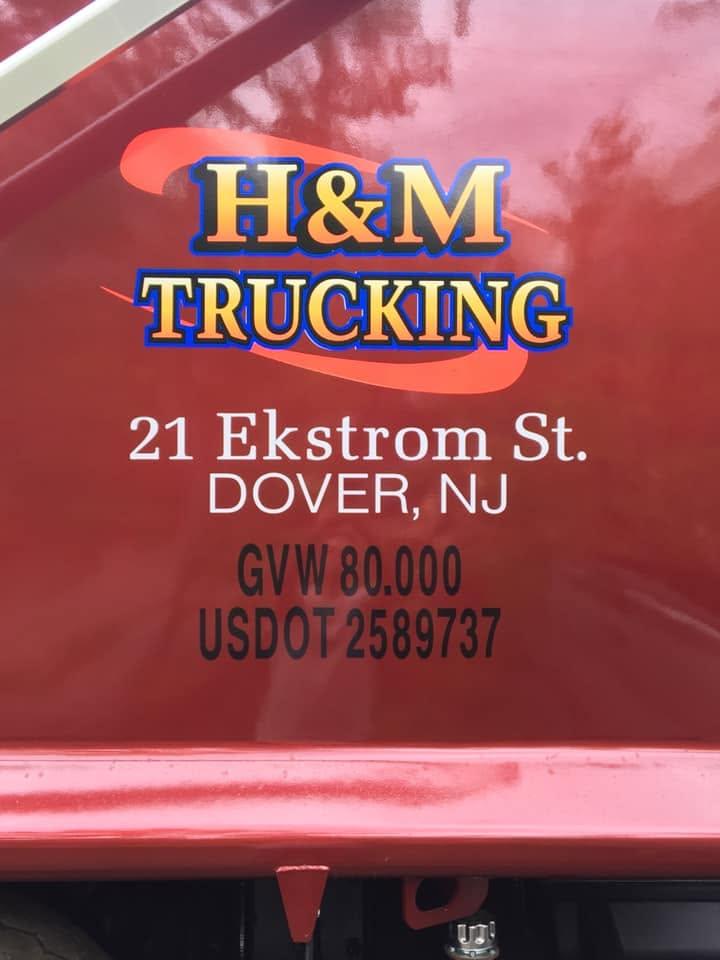
New Jersey requires most commercial vehicles to display the owner’s name and principal-place-of-business municipality in letters at least three inches high (N.J.S.A. 39:4-46). Trucks of 10,001 lb or more also need a USDOT number and legal name on both sides, and NJ-based trucks of 26,001 lb or more must show their GVWR. Licensed trades add their own license-number lines.
The three layers of New Jersey commercial vehicle marking law
Marking rules for a New Jersey work truck come from three separate places, and each one adds lines to the door. The state motor vehicle statute, N.J.S.A. 39:4-46, sets the base rule for name, municipality and, on heavy trucks, GVWR. Federal motor carrier rules in 49 CFR 390.21T set the USDOT marking, and New Jersey applies them to intrastate carriers through N.J.A.C. 13:60-2.1. The licensing boards for home improvement contractors, plumbers, HVACR contractors and electricians each add a license or registration line of their own.
Put together, one cab door on a plumbing contractor’s heavy pickup can need four or five distinct legal lines before any advertising goes on it. This page walks through each layer using the text of the rules themselves, with links to the official or primary sources at the bottom. For the design, film and application side of a lettering job, see our truck lettering page.
Lombardo Lettering is a sign and lettering company, not a law firm. Nothing here is legal advice. Rules change, and your registration class, weight, operating authority and trade license decide what applies to you, so confirm the specifics with the NJ Motor Vehicle Commission, FMCSA, your licensing board or your own attorney.
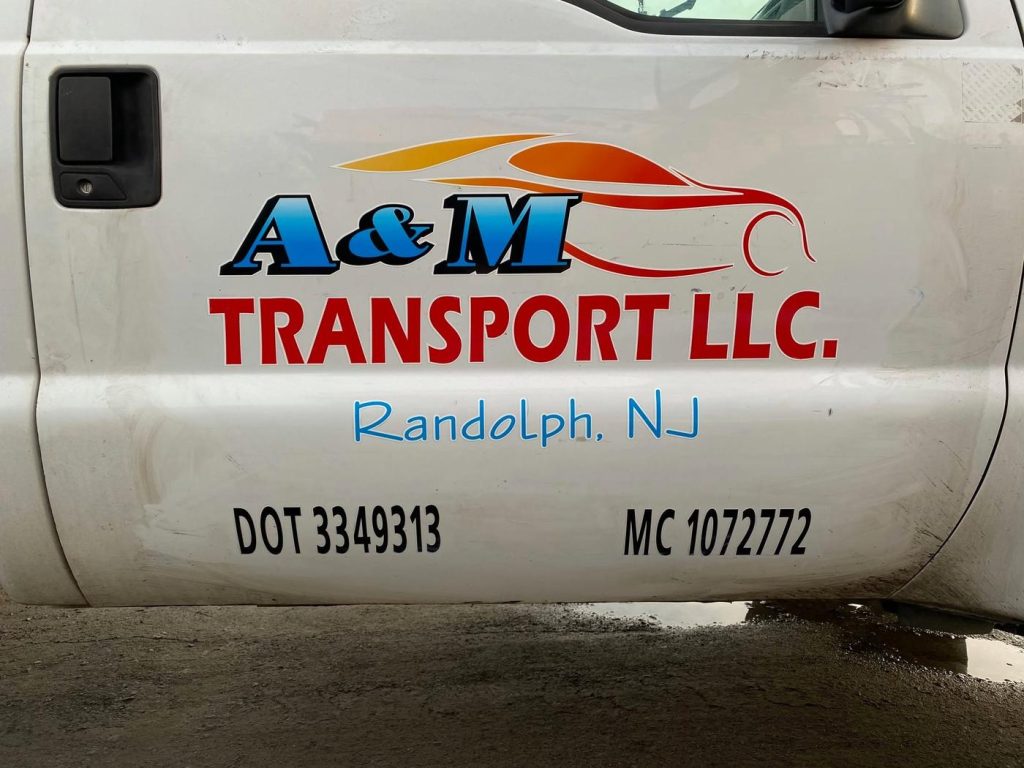
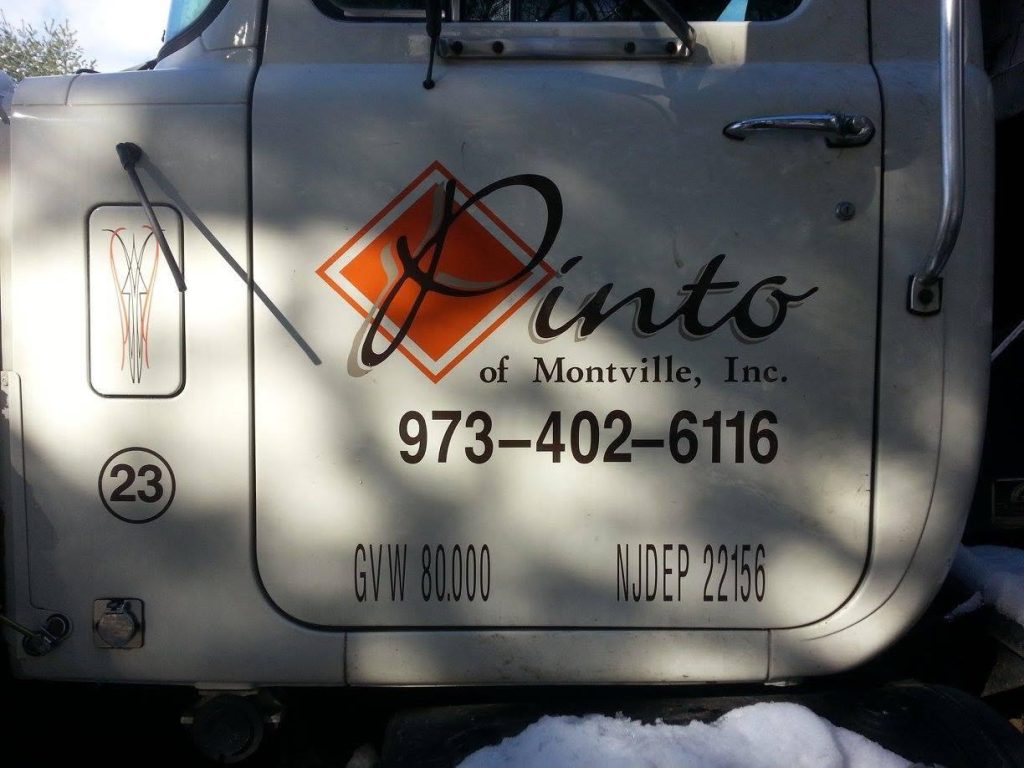
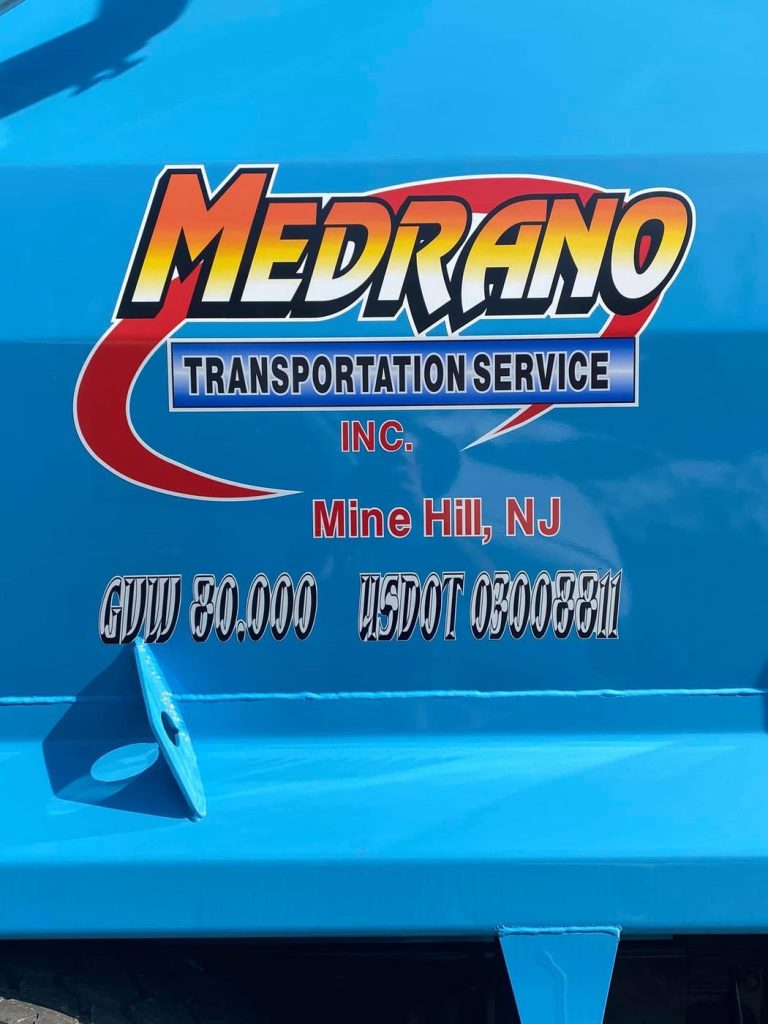
Recent nj vehicle lettering work across New Jersey
N.J.S.A. 39:4-46: name, municipality and the three-inch rule
This is the rule every commercial vehicle owner in the state runs into first. It is short, but it has more conditions in it than most people realize.
Which vehicles are covered and which are exempt
Subsection (a) covers every vehicle used for commercial purposes on a street or highway. Two kinds are excepted: passenger automobiles, and drug-delivery vehicles owned or leased by a pharmacy. A pickup, van, box truck or tractor used for a business is not a passenger automobile, so it needs the marking. The MVC’s commercial vehicle page states the same requirement for Code 11 commercial trucks and tractors, the plates that carry the word “commercial”.
What has to be displayed
The vehicle, or a name plate affixed to it, must conspicuously show the name of the owner, lessee or lessor and the name of the municipality where that party has its principal place of business. The statute ties the line to the principal place of business, not to wherever the truck is parked overnight.
Size: three inches, or as close as the vehicle allows
The sign or name plate must be in plain view and not less than three inches high. The statute recognizes that some vehicles do not have room: where the vehicle’s design or other legally required markings limit the space, the lettering must be as close to three inches as possible, provided the name is still clearly visible and readily identifiable. That clause matters on small van doors and narrow cab doors, but it is a fallback, not a license to shrink the name to make room for a logo.
Truck-and-trailer combinations and large fleets
For a combination of two vehicles, such as a truck pulling a trailer, the requirement is met when either unit carries the identification. Franchised public utilities (utilities defined in R.S.48:2-13 with a BPU-approved service territory) and operators of fleets of 50 or more commercial vehicles may display a corporate identification number in place of the municipality name. The NJDOT trucking requirements page summarizes the rule the same way.
Weight thresholds: which marking rules apply at 10,001 and 26,001 lb
Weight is what moves a truck from one set of marking rules to the next. Start with the GVWR on the manufacturer’s label and compare it with the registered weight on the registration. Then work up this ladder:
- Any commercial vehicle that is not a passenger automobile: owner, lessee or lessor name and principal-place-of-business municipality, at least three inches high (N.J.S.A. 39:4-46(a)). Licensed trade lines apply at any weight.
- 10,001 lb GVWR, GCWR or registered weight and up: the vehicle is a commercial motor vehicle for intrastate purposes under N.J.A.C. 13:60-2.1, which states that such a vehicle must not be operated without a USDOT registration and an active USDOT Number. The federal definition in 49 CFR 390.5 uses the same 10,001 lb line for interstate carriers. The 390.21T marking rules follow.
- Passenger and hazmat triggers: vehicles designed to carry more than 8 passengers for compensation or more than 15 not for compensation, and placarded hazardous-materials vehicles, are also commercial motor vehicles regardless of weight.
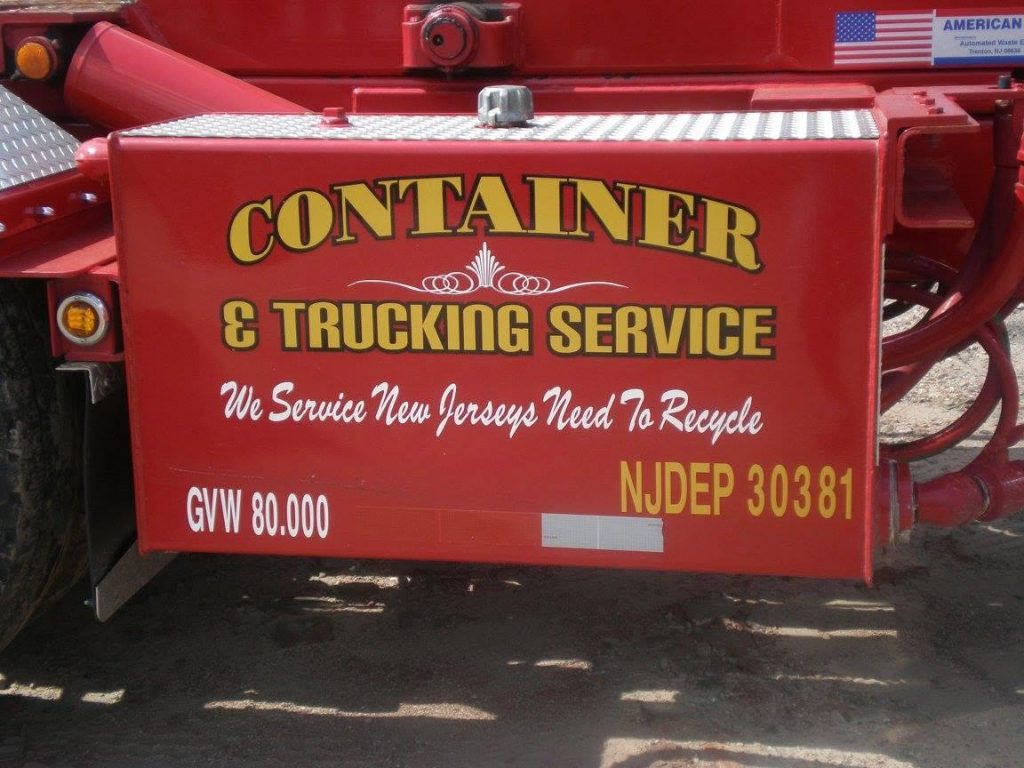
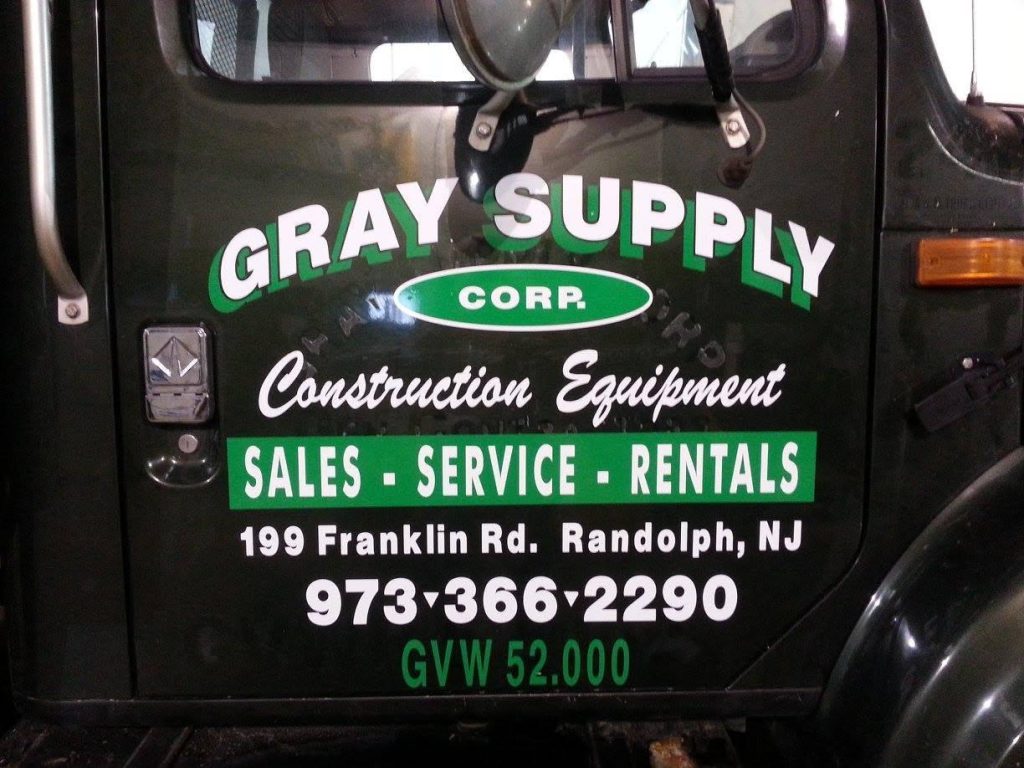
- 26,001 lb GVWR or GCWR and up, registered or principally garaged in New Jersey: the GVWR must be displayed the same way as the name (N.J.S.A. 39:4-46(b)). GVWR here means the manufacturer’s maximum loaded weight or the registered gross weight, whichever is greater.
The penalty for understating GVWR
The GVWR line is the one with real teeth. Knowingly displaying a GVWR lower than the actual one, or knowingly letting such a vehicle operate, can bring a fine of up to $5,000, up to 90 days’ imprisonment, or both, for each offense. Read the number off the label and the registration and use the greater one; never round it down to make a truck look lighter.
USDOT number markings under 49 CFR 390.21T
Once a truck crosses the 10,001 lb line, the federal marking rule decides what the USDOT lettering looks like. The editorial note on 49 CFR 390.21 records that a Federal Register document of August 14, 2019 (84 FR 40294) suspended that section indefinitely, so the operative text is 390.21T. Both versions carry the same 50-foot legibility test.
- Both sides of every self-propelled commercial motor vehicle must show the motor carrier’s legal name or a single trade name, matching what is on file on Form MCS-150.
- The FMCSA-issued number must appear preceded by the letters “USDOT”.
- If another entity’s name appears on the vehicle, the carrier’s name must be preceded by the words “operated by”.
- Letters must contrast sharply in color with the background and be readily legible during daylight from 50 feet while the vehicle is stationary.
- The marking must be kept and maintained so it stays legible, whether it is painted on or a removable device.
Rented and short-term leased trucks
A commercial motor vehicle rented for 30 days or less may keep the lessor’s name and USDOT number, as long as the rental agreement shows the renting carrier’s name, the complete physical address of its principal place of business and its USDOT number. A truck you lease long-term or buy needs your own carrier name and number.
Trade license and registration lines for NJ contractor vehicles
New Jersey’s professional boards each have their own vehicle marking rule, and the letter heights are not the same. A contractor holding more than one license, or a home improvement contractor who also runs a heavy truck, has to satisfy every rule that applies at once.
- Home improvement contractors (N.J.A.C. 13:45A-17.11(e)): every commercial vehicle owned or leased by a registered HIC must be marked on both sides with the contractor’s name in letters at least one inch high and “HIC reg. #” followed by the registration number.
- Master plumbers (N.J.A.C. 13:32-3.1): both sides must show the master plumber’s name (at least 1 inch), “Plumbing license number” or “Plumbing Lic. #” with the number (at least 1 inch), and the owner or lessee name and municipality (at least 3 inches).
- Master HVACR contractors (N.J.A.C. 13:32A-5.1): the driver’s and passenger’s sides must show the business name, the master HVACR contractor’s or bona fide representative’s name (at least 1 inch), “Master HVACR contractor license number” or “Master HVACR contractor Lic. #” with the number (at least 1 inch), and the practice or principal-office municipality (at least 3 inches).
- Electrical contractors (N.J.A.C. 13:31-1.5): both sides must show the licensed electrical contractor’s name and “Electrical Contractor business permit number” or “Electrical Contractor Bus. Permit #” with the number, both at least three inches high.
When a license lapses, the number has to come off
The HIC rule goes further than most: under N.J.A.C. 13:45A-17.11(a), if the registration is suspended, not renewed or revoked, the contractor must immediately remove the registration number from all vehicles and advertising. Old numbers and outdated lines can be taken off with decal removal before corrected lettering goes on.
Why Lombardo
NJ vehicle lettering, done at your yard
We bring the shop to you, so your vehicle keeps working while we do the job. Call Frank for a straight answer, or send a photo and we will reply with a price.
- Mobile — we come to your yard or job site
- Premium Avery, 3M or Orafol cast film
- Layout proofed on your vehicle before anything is cut
Placing legal lettering around racks, reflective tape and small doors
The statute asks for plain view and the federal rule asks for a 50-foot daylight read, and lettering that sits behind equipment can fail both even when every required word is present.
Ladder racks, toolboxes, rear-mounted lift gates and pickup caps all hide panels. Lay the legal lines out with the rack and boxes in place, not on a bare truck. On a pickup, the doors are usually the only panels that stay clear on both sides, which is why the name, municipality, USDOT number and license lines tend to live there.
Trailers bring a second constraint. Under 49 CFR 393.11, trailers 80 inches or wider with a GVWR over 10,000 lb, manufactured on or after December 1, 1993, need retroreflective sheeting, reflex reflectors or a combination meeting FMVSS No. 108 (pole trailers and trailers built only for living or office use are excluded). That conspicuity tape takes priority, so lettering has to work around it rather than cover it. With a truck and trailer, 39:4-46 lets either unit carry the state identification, so many operators keep the legal lines on the cab doors and leave the trailer for advertising.
On small vans and narrow doors, use the “as close to three inches as possible” clause only when the space truly runs out. Shorten the marketing text first. The required name should never be the line that gets smaller.
Magnetic signs, painted letters and vinyl under NJ and FMCSA rules
Magnets are legal. N.J.S.A. 39:4-46 allows the identification on the vehicle or on “a name plate affixed thereto”, and 49 CFR 390.21T expressly allows a removable device as long as it meets the same identification and legibility requirements. Neither rule bans them.
The practical argument for permanent lettering is the duty to keep the marking legible. A magnet that slides, curls at the corners, gets left in the garage or blows off on Route 80 leaves the truck unmarked until someone notices. Cut vinyl stays on the panel and cannot be swapped between trucks by accident.
Lombardo Lettering cuts compliance lettering from premium Avery, 3M or Orafol cast film rather than cheap calendered vinyl, and removes old graphics cleanly before new ones go on. Every layout is proofed on a template of your actual vehicle, so you can check the legal name, numbers and spelling against your paperwork before anything is cut, and nothing is cut until you approve it. We do the work at your yard, driveway, job site or municipal garage; shop visits are by appointment. If your truck only needs the legal lines brought up to date, that is what we will quote; we will not push a vehicle wrap when lettering does the job.
NJ compliance lettering checklist and the changes that trigger re-lettering
Walk around each truck with its registration, MCS-150 details and license cards in hand and check:
- Is the owner, lessee or lessor name and the principal-place-of-business municipality on the truck, at least three inches high?
- Do the USDOT lines appear on both sides, preceded by “USDOT”, with the legal or trade name exactly as filed?
- Does another company’s name appear on the truck, and if so, is your name preceded by “operated by”?
- For a truck of 26,001 lb or more, does the displayed GVWR match the greater of the manufacturer’s rating and the registered gross weight?
- Are the HIC, plumbing, HVACR or electrical numbers current, on both sides and at the required height?
- Can you read every legal line from 50 feet in daylight, with no peeling, fading, low contrast or rack in the way?
Business changes that mean the lettering must change
Several ordinary business events change what the law requires on the door. Moving the principal place of business to a new town changes the municipality line. Growing to 50 or more commercial vehicles opens the option of a corporate identification number instead of the municipality. Buying or leasing a truck above 10,001 lb brings in the USDOT marking, and above 26,001 lb adds the GVWR. A new trade license, a lapsed HIC registration, or a new legal or trade name on the MCS-150 all mean new lines. Companies running several trucks can keep these updates consistent through a fleet lettering program.
Getting a quote for compliance lettering
Lombardo Lettering is a family business founded in 1940 by Frank Lombardo Sr., now run by Frank Lombardo Jr., with his son Tristan, the third generation, working alongside him, from 95 W Main St in Chester, off Route 206 and Route 24. We work across Morris, Essex, Warren, Union, Bergen, Somerset, Sussex and Hunterdon counties; see our service areas. Call 973-214-2292 and ask for Frank, email franksignguy@yahoo.com, or request a quote with a photo of the truck and the wording from your registration and license.
Our work, up close
NJ Vehicle Lettering Law — questions we get asked
Are magnetic door signs legal for NJ commercial vehicles?
Yes. N.J.S.A. 39:4-46 allows the name and municipality on the vehicle or on a name plate affixed to it, and 49 CFR 390.21T allows a removable device that meets the same identification and legibility rules. The catch is upkeep: the marking has to stay on the truck and stay legible, which is why many owners prefer cut vinyl.
Does my truck need lettering if I only work inside New Jersey?
Usually yes. The state name and municipality rule in N.J.S.A. 39:4-46 applies to commercial vehicles on any street or highway. And under N.J.A.C. 13:60-2.1, a commercial motor vehicle in intrastate commerce, including one of 10,001 lb or more, must not operate without USDOT registration and an active USDOT number, so the federal marking rules follow it.
Which town goes on the truck if we have a shop in one town and a yard in another?
The statute asks for the municipality of the owner’s, lessee’s or lessor’s principal place of business, not where the truck is parked overnight. If you are unsure which location counts as the principal place of business, check your registration and business filings or ask the MVC. Fleets of 50 or more may use a corporate identification number instead.
Do both the truck and the trailer need the company name?
Not under the state rule. N.J.S.A. 39:4-46(a) says that for a combination of two vehicles, the requirement is met when either unit carries the identification. Federal USDOT marking under 49 CFR 390.21T applies to self-propelled commercial motor vehicles, so it belongs on the power unit. Remember to keep trailer lettering clear of required conspicuity tape.
What does the HIC rule require on my truck?
N.J.A.C. 13:45A-17.11(e) requires both sides of every commercial vehicle a registered home improvement contractor owns or leases to show the contractor’s name in letters at least one inch high and “HIC reg. #” followed by the registration number. That is in addition to the three-inch name and municipality required by N.J.S.A. 39:4-46, not a replacement for it.
When does a truck have to show its GVWR in New Jersey?
When it is a commercial motor vehicle with a GVWR or GCWR of 26,001 lb or more and is registered or principally garaged in New Jersey. Use the greater of the manufacturer’s maximum loaded weight and the registered gross weight. Knowingly displaying a lower GVWR can bring a fine of up to $5,000, up to 90 days in jail, or both, per offense.
What is the fine for not having a company name on a NJ work truck?
A BillTrack50 summary of Assembly Bill A470 (2020-2021) gives the current fine as $10. That bill would have raised it to $250, $500 and $1,000 for repeat offenses, but it never got past committee referral and died in January 2022. This figure comes from a secondary source, so confirm it with the MVC. Understating GVWR carries far heavier penalties.
Do I need "operated by" on a truck that shows another company’s name?
Under 49 CFR 390.21T, if the name of a person other than the operating motor carrier appears on the vehicle, the carrier’s name must be preceded by the words “operated by”. A short-term rental of 30 days or less can keep the lessor’s name and USDOT number if the rental agreement shows the renting carrier’s name, principal-place-of-business address and USDOT number.
Ready for a quote?
Call 973-214-2292 and talk to Frank directly.
Areas we serve across New Jersey
Eight counties. Pick yours to see the towns we cover. Mobile truck lettering, wraps and signs — we come to your yard.
Find us in Chester, NJ
Our shop is at 95 W Main Street, Chester, New Jersey 07930 — but for lettering and wraps, we come to you.
Our mobile service area
Eight counties across northern and western New Jersey, covered by our own trucks.