Service
Shirts & Apparel in New Jersey
Crew shirts, hats and logo hi-vis for New Jersey contractors, decorated to match the lettering on your trucks.
Lombardo Lettering puts your company name on crew shirts, polos, hoodies, hats and hi-vis for New Jersey contractors. As a rule of thumb, embroidery suits polos, caps and jackets, screen printing suits larger tee orders, and heat transfer suits small runs and names. Roadway hi-vis must meet ANSI/ISEA 107 Class 2 or 3, and a logo cannot break that rating.
Crew apparel for contractors: shirts, outer layers, hats and hi-vis
Crew apparel is the clothing your people wear on the job with your company name on it. For most service businesses it falls into five groups.
Lombardo Lettering has been a family business since Frank Lombardo Sr., an army veteran, founded it in 1940 painting signs, pinstripes and murals. His son Frank Jr. moved the business to cut vinyl, printed wraps and adhesive graphics, and Tristan Lombardo, the third generation, works alongside his father. Apparel sits next to truck lettering, custom signs and banners so the whole company carries one look.
- Everyday shirts: short- and long-sleeve tees, pocket tees and work shirts, often decorated on the left chest and the full back.
- Customer-facing shirts: polos and button-ups for estimators, owners and office staff who meet homeowners.
- Outer layers: hoodies, sweatshirts and jackets for cold-weather work.
- Hats: structured and unstructured caps and winter knit hats, decorated on the front panel.
- High-visibility garments: logo vests, tees and sweatshirts for crews working near traffic or moving equipment.
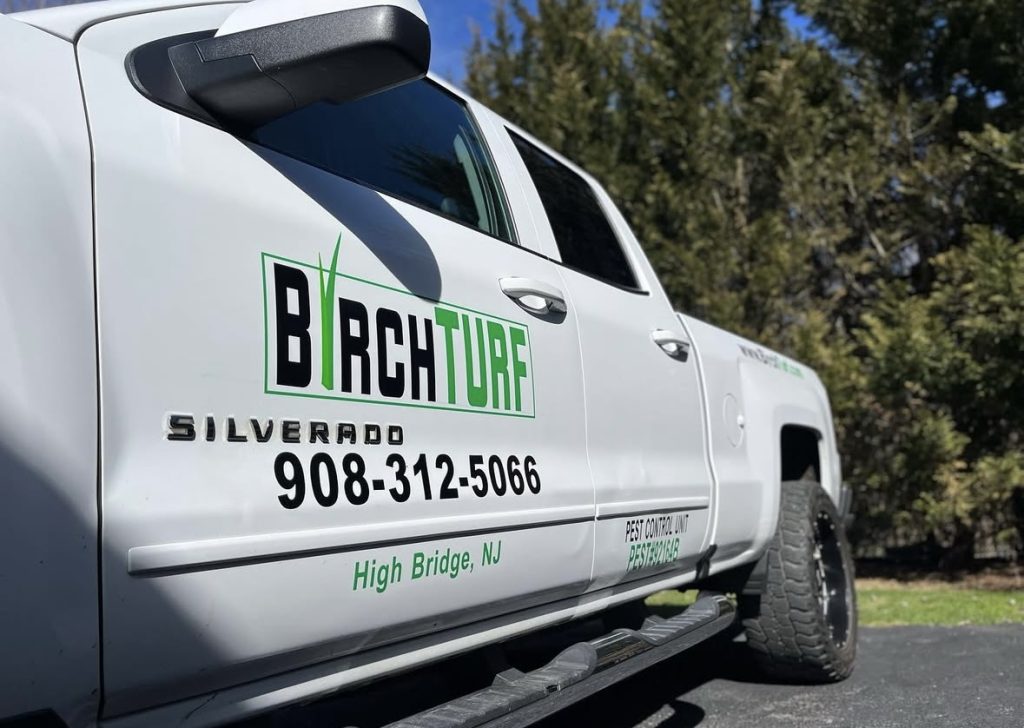
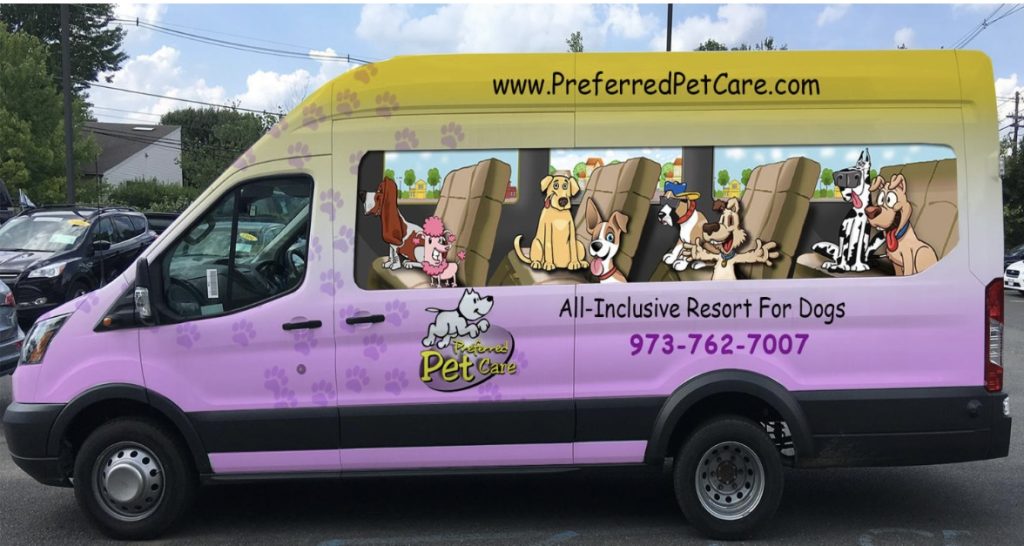
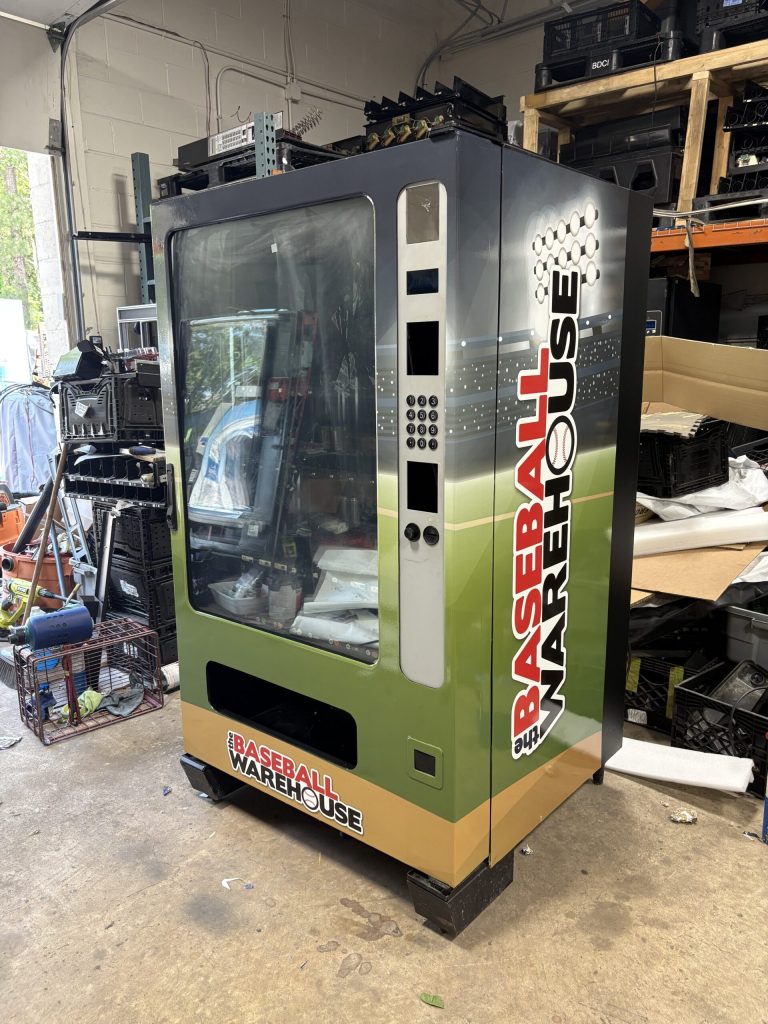
Recent shirts & apparel work across New Jersey
Screen print vs embroidery vs heat transfer for work clothes
The right method depends mostly on the garment and the quantity. A crew of three and a company of forty need different answers, and a cap is not decorated the same way as a tee.
Embroidery: polos, caps, jackets and hoodies
Embroidery stitches the logo into the fabric with thread, so there is no ink layer to crack or peel. It suits polos, structured caps, jackets and heavier sweatshirts. Thread choice matters for work clothes: Madeira describes its Polyneon line as a 100% polyester embroidery thread whose colors resist chlorine bleach, and markets it for uniforms and safety garments. Fine lines and very small text are harder to render in thread than in ink or vinyl, so a busy logo may need a simplified version for stitching.
Screen printing: larger tee and sweatshirt orders
Screen printing pushes ink through a mesh stencil, with a separate screen for each color. Because the screens are made once per design, the method is usually chosen for a full crew order of the same print, and it handles large full-back designs. The step that decides whether a print lasts is curing. Screenprinting.com’s guidance gives a cure temperature of 320°F for standard plastisol ink and 260°F for its low-cure plastisol, and says ink that does not reach full cure is likely to wash out.
Heat transfer: small runs, names, numbers and reflective logos
Heat transfer applies a pre-made film or print with a heat press. It makes sense for a handful of shirts, for adding individual names or truck numbers, and for logos cut from reflective film. Fabric matters: 3M’s application instructions for its Scotchlite reflective transfer films say to avoid applying film over seams and stitches, note that nylon and fabrics with a durable water repellent (DWR) finish are difficult to adhere to, and say two of its films should not be used on knitted T-shirts or 100% cotton where good adhesion is needed for extended use.
ANSI/ISEA 107 hi-vis types and classes, and when roadway work requires them
High-visibility safety apparel is a tested and labeled garment, not just a bright shirt. 3M’s guide to ANSI/ISEA 107-2020 describes it as the fifth edition of the standard and the replacement for the 2015 version. Garments are sorted into three Types: Type O for workers not required by the MUTCD to wear hi-vis but still exposed to moving equipment or vehicles, Type R for workers exposed to roadway traffic, and Type P for fire, police and EMS. Classes within each Type set the minimum amounts of background and retroreflective material.
On public roads the rule is set by the federal MUTCD, 11th Edition, Section 6C.05. It requires all workers within the right-of-way who are in a temporary traffic control zone, day or night, to wear apparel meeting Performance Class 2 or 3 of ANSI/ISEA 107-2015 or equivalent revisions, and its guidance calls for Class 3 for flaggers at night. OSHA’s flagger rule, 29 CFR 1926.201(a), requires flagger warning garments to conform to Part VI of the MUTCD, and in a 2009 interpretation letter OSHA said high-visibility apparel is required under the General Duty Clause for employees exposed to public and construction traffic in highway and road construction work zones. For excavations, 29 CFR 1926.651(d) requires employees exposed to public vehicular traffic to wear warning vests or other garments marked with or made of reflectorized or high-visibility material.
The choice of class belongs to your company. Under the MUTCD, a person designated by the employer to be responsible for worker safety selects the class, and OSHA’s work-zone guidance says employers should base it on a hazard analysis covering closeness to traffic, time of day, weather, background complexity, task load and traffic speed. The minimums below, from 3M’s ANSI/ISEA 107-2020 summary, are a starting point for that conversation, not a substitute for it.
- Type O, Class 1: for workers off the public roadway who still face moving equipment or vehicles. Class 1 is the only option for Type O. Minimum 217 sq in of background material.
- Type R, Class 2: minimum 775 sq in background and 201 sq in retroreflective. OSHA’s guidance links Class 2 to work close to traffic and to vehicles or equipment traveling 25 mph or more.
- Type R, Class 3: minimum 1,240 sq in background and 310 sq in retroreflective, with at least one retroreflective band around each sleeve. OSHA says Class 3 should be considered for higher vehicle speeds or reduced sight distances.
- Class E: hi-vis pants, shorts or gaiters. Minimum 465 sq in background and 109 sq in retroreflective.
How a logo on hi-vis can break its ANSI rating, and how to avoid it
A compliant vest can become non-compliant once a large logo goes on it. 3M’s summary of ANSI/ISEA 107-2020 says the material minimums apply to the entire garment, front and back, so every square inch a print covers comes out of that total. It also says covered material cannot create a horizontal gap wider than 2 inches in the retroreflective material, and that designs should balance the required materials between the front and the back.
Printing on the reflective tape is the most common mistake. 3M’s Scotchlite transfer film data sheet states plainly that printed areas will not be retroreflective. A logo printed across a stripe turns that stretch of stripe into ordinary fabric at night.
The label is the final check. According to 3M’s guide, a garment can be labeled ANSI/ISEA 107-2020 compliant only after all material performance and design requirements are met, and the label marking includes the manufacturer, the style, the size, and the standard’s name with its year.
- Put the logo on the fluorescent background panel, not on or across the reflective stripes.
- Check the background area left after the logo against the class minimum. The standard allows a lower background minimum only on the smallest size of a Class 2 or Class 3 design (540 and 1,000 sq in), so small sizes have the least room to spare.
- For a logo that should shine in headlights, cut it from reflective transfer film rather than printing it. 3M recommends its 5807 Custom Cuttable Transfer Film for plotter cutting and lists it as meeting ANSI/ISEA 107-2020.
- Pick the background color for contrast with the work area. ANSI/ISEA 107-2020 allows fluorescent yellow-green, orange-red and red, and 3M suggests weighing urban or rural settings, foliage, and if your equipment is yellow or orange. For work in a roadway traffic control zone, the MUTCD limits the background to fluorescent orange-red, fluorescent yellow-green or a combination of the two.
Matching crew shirts to your truck lettering and signs
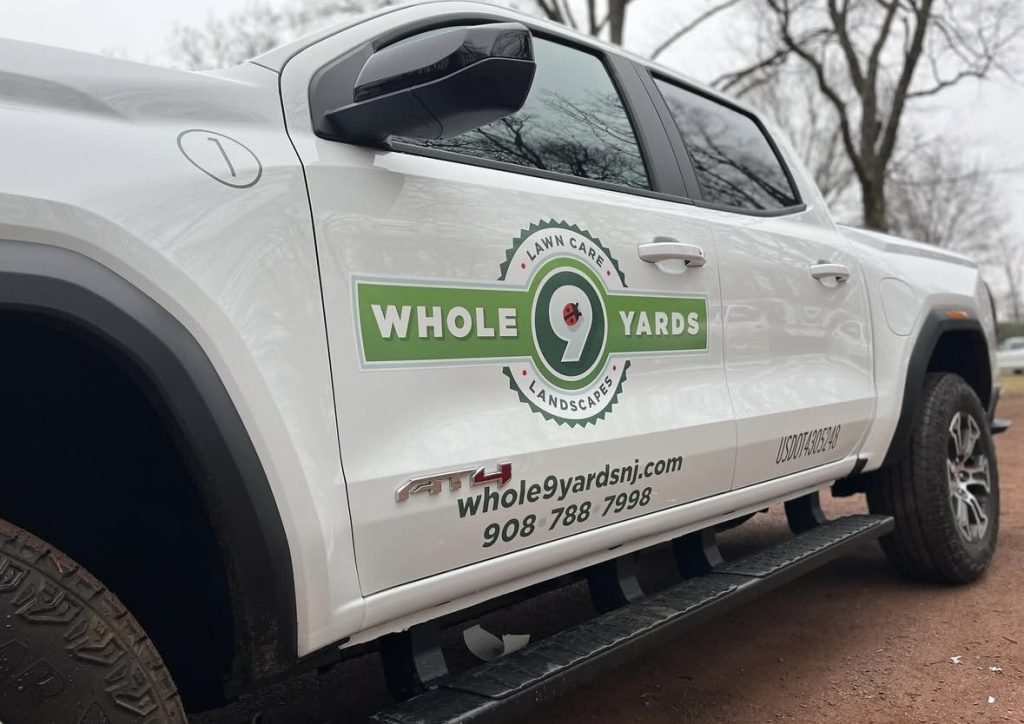
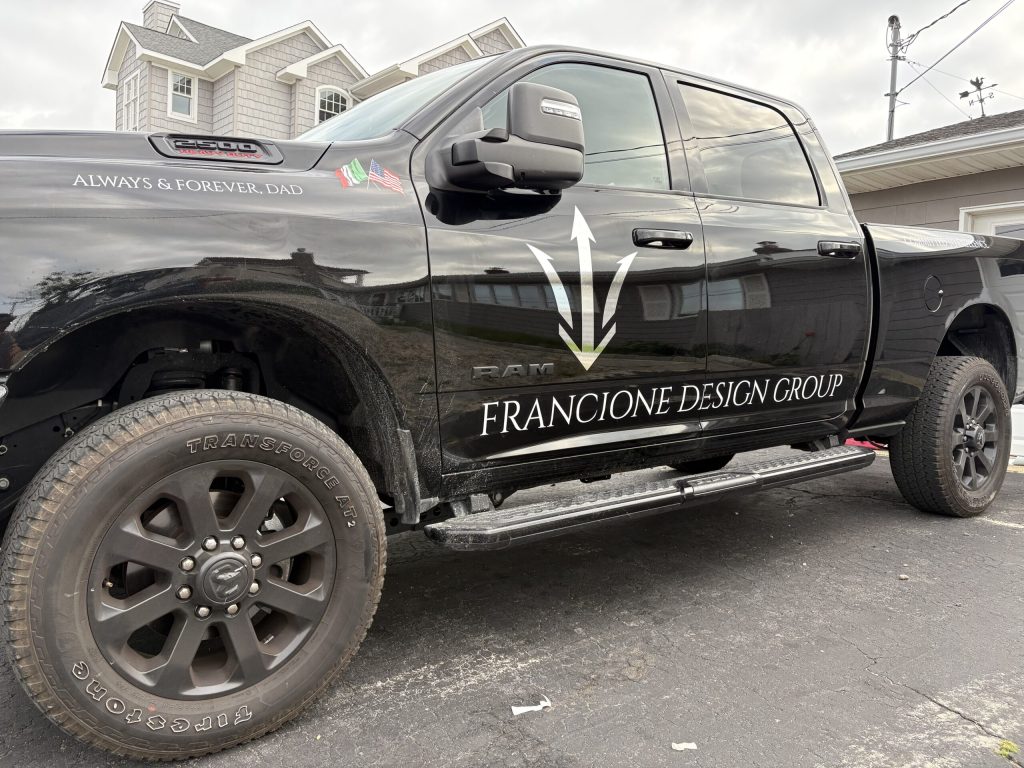
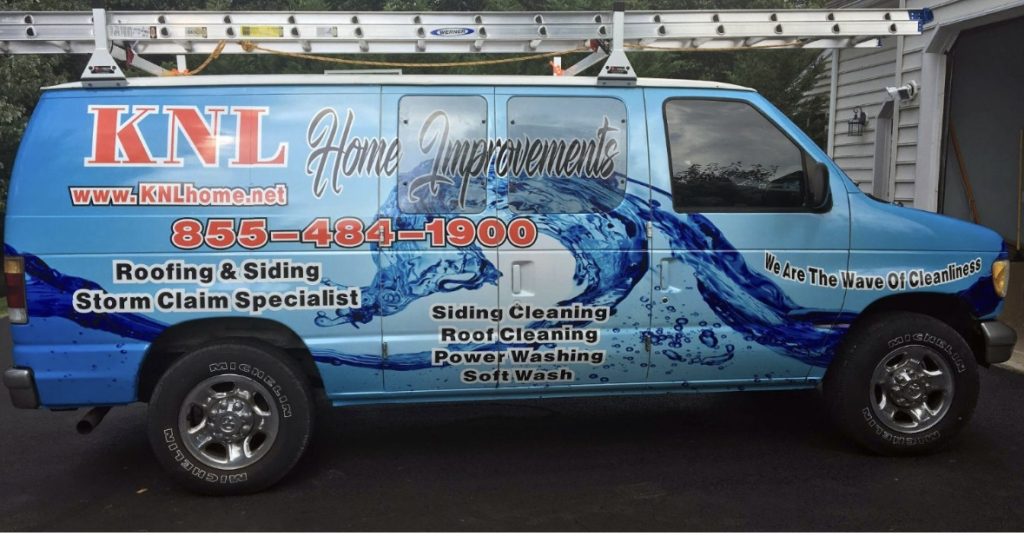
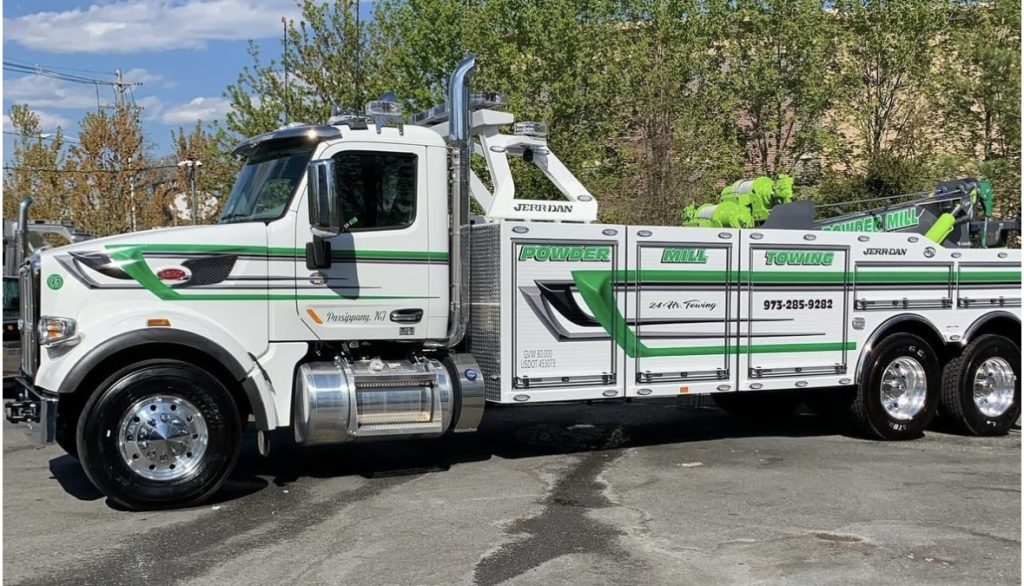
A homeowner sees your truck in the driveway, your sign at the curb and your crew at the door. When all three carry the same logo, colors and phone number layout, they read as one company. Lombardo proofs truck lettering on a template of your actual vehicle and you approve it before anything is cut. That approved layout is a good reference for the shirts, so the logo lockup and phone treatment match what is on the doors.
One honest limit: thread, ink and cast vinyl film are different materials, and the same named color will not look identical on all three. A deep red stitched on a polo, printed on a tee and cut from 3M or Avery film will sit close, not exact. A logo version with strong shapes and two or three solid colors keeps the match convincing on every surface.
If your logo is a scan of an old business card, or the truck version has too much fine detail for thread, graphic design can rebuild it as clean vector art that works on a door, a sign, a cap and a shirt pocket. For a company with several vehicles, fleet lettering and apparel can share the same written spec.
Why Lombardo
Shirts & apparel, done at your yard
We bring the shop to you, so your vehicle keeps working while we do the job. Call Frank for a straight answer, or send a photo and we will reply with a price.
- Talk to Frank directly — most quotes take one phone call
- Priced from a photo of your vehicle or space
- Three generations of sign work, since 1940
Writing a crew apparel spec so reorders for new hires match
Small contractors need enough for the current crew and a way to get an identical shirt for the next hire. A short written spec on the first order makes every reorder match.
- Garment: brand, style and color of each item, because the same color name varies between makers.
- Placement: left chest, full back, sleeve or cap front, with the logo width for each.
- Method: embroidery, screen print or heat transfer for each garment, plus thread or ink colors.
- Sizes: a size count per person, including tall sizes for long-sleeve and hi-vis items.
- Hi-vis details: Type and Class required, background color, and where the logo sits relative to the reflective stripes.
Washing work shirts and hi-vis so decoration and reflectivity last
Start with the sewn-in care label. The FTC Care Labeling Rule requires care labels to be attached permanently and stay legible for the useful life of the garment, to give washing or drycleaning instructions, and to warn against procedures that would harm the item.
For reflective trim and transfers, 3M’s Scotchlite data sheet describes home washing at moderate water temperatures up to 60°C (140°F), says only non-chlorine bleach should be used, says high-alkaline treatments such as stain removal products should not be used, and notes that tumble drying at high temperatures can limit garment life. It also says reflective apparel exposed to contaminants should be cleaned and laundered promptly, because contaminants may decrease retroreflectivity. 3M rates its 5807 cuttable film at 50 home washes and 30 dry-clean cycles and its 9725 industrial wash film at 100 home washes and 50 industrial washes. Those are manufacturer test ratings, not a promise about any particular shirt.
- Use non-chlorine bleach only on hi-vis and reflective items.
- Skip high-heat tumble drying.
- Wash hi-vis promptly after it is exposed to oil, grease or other contaminants.
- Check hi-vis in headlights from time to time. 3M notes that performance varies with use, exposure and maintenance.
Getting a quote for crew shirts, hats and hi-vis
Call Frank at 973-214-2292, email franksignguy@yahoo.com or use the quote form. Helpful details to include are the garment types, a size count, the placement you want, and whether any hi-vis is for roadway work. Send your logo file or a photo of your lettered truck if you have one.
Lombardo Lettering is at 95 W Main St in Chester, off Route 206 and Route 24, and shop visits are by appointment. The family serves Morris, Essex, Warren, Union, Bergen, Somerset, Sussex and Hunterdon counties; see service areas for the full list, or read more about the family.
Our work, up close
Shirts & Apparel — questions we get asked
Is embroidery or screen printing better for crew shirts?
It depends on the garment. Embroidery suits polos, caps, jackets and hoodies because the logo is stitched in with no ink layer to crack. Screen printing suits a larger order of the same tee design and large full-back prints. Many crews use both: embroidered polos and caps for meeting customers, screen-printed tees for daily work.
Which hi-vis class do my roadside workers need?
The MUTCD requires ANSI/ISEA 107 Performance Class 2 or 3 apparel for all workers within the right-of-way in a temporary traffic control zone, day or night, and its guidance calls for Class 3 for nighttime flaggers. OSHA says employers should choose the class through a hazard analysis, and the MUTCD leaves the selection to the person your company designates as responsible for worker safety.
Can a logo go on a hi-vis vest without losing compliance?
Yes, if the logo sits on the fluorescent background rather than the reflective stripes and the remaining material still meets the class minimums. 3M notes that printed areas on its reflective film are no longer retroreflective, and covered material cannot leave a horizontal gap wider than 2 inches in the reflective band. A logo cut from reflective film is another option.
What is the difference between Type O, Type R and Type P hi-vis?
ANSI/ISEA 107-2020 uses three Types. Type O is for workers not required by the MUTCD to wear hi-vis but still exposed to moving equipment or vehicles, and Class 1 is its only option. Type R is for workers exposed to roadway traffic. Type P is for fire, police and EMS. Contractors working near public traffic will normally need Type R.
Which method works for just a few shirts?
Heat transfer and embroidery both suit a handful of garments, while screen printing needs a screen made for each color of the design, so it is usually chosen for larger runs of one print. Keep a written spec of the garment style, color, placement and decoration so a new hire’s shirt matches the rest of the crew later.
Will the shirts match the colors on our trucks?
They will be close, not identical. Thread, ink and cast vinyl film are different materials, so the same named color looks slightly different on each. Using the same logo layout and phone number treatment as your approved truck lettering, and a logo with two or three solid colors, keeps the match consistent across shirts, hats, signs and vehicles.
How should we wash hi-vis vests and reflective shirts?
Follow the sewn-in care label. For its Scotchlite reflective trim, 3M describes home washing up to 140°F, says to use only non-chlorine bleach and no high-alkaline stain removers, and notes that high-temperature tumble drying can limit garment life. It also advises laundering reflective apparel promptly after exposure to contaminants.
Why did the print on our old shirts wash out?
A common cause is ink that never fully cured. Screenprinting.com’s guidance gives 320°F as the cure temperature for standard plastisol ink and says ink that does not reach full cure is likely to wash out. Heat has to reach through the whole ink layer, so thick prints need more care at the dryer.
Ready for a quote?
Call 973-214-2292 and talk to Frank directly.
Areas we serve across New Jersey
Eight counties. Pick yours to see the towns we cover. Mobile truck lettering, wraps and signs — we come to your yard.
Find us in Chester, NJ
Our shop is at 95 W Main Street, Chester, New Jersey 07930 — but for lettering and wraps, we come to you.
Our mobile service area
Eight counties across northern and western New Jersey, covered by our own trucks.