Skip to content

Service

Custom signs for New Jersey businesses

Post-and-panel, building-mounted, job-site and A-frame signs, plus the materials, permits and town sign rules that apply to them in New Jersey.

A custom business sign is a panel of aluminum composite, PVC or corrugated plastic carrying your name in vinyl or print, mounted on posts, a wall or a sidewalk frame. In New Jersey the material sets how long it lasts outdoors, and your town’s sign ordinance sets how big it can be and whether it needs a permit.

Business sign types: post-and-panel, wall panels, job-site boards and A-frames

Most small-business signs fall into a handful of formats. Each one solves a different problem, and towns treat them differently in their zoning codes, so it helps to know which format you need before you ask for a price.

Post-and-panel and yard signs

A flat panel fastened between two posts set in the ground. This is the usual format for a contractor’s yard, an office park entrance or a farm stand, and for a home-based business where the town allows a sign. A ground-supported sign is also the only format that can qualify for New Jersey’s construction-permit exemption, covered below.

Building-mounted panels

A panel fastened flat to the facade above a door or storefront, or hung from a bracket as a blade sign. Towns review these against the building: East Windsor Township’s sign application, for example, asks for the sign area as a percentage of the facade and a drawing of the facade showing the sign exactly as it will appear.

Job-site and construction boards

Temporary signs staked in front of a project with the builder’s name and phone number. They come down when the job closes, so a light, inexpensive material makes sense.

A-frames and sandwich boards

Two-sided portable signs set on the sidewalk while a business is open. Because they sit in the pedestrian path, towns that allow them set rules on size, placement and clearance; the Morristown example below shows how detailed those rules can be.

Interior, room and safety signs

Suite numbers, lobby logos, hours, directional arrows and safety notices. Room-identification signs and workplace safety signs have federal rules of their own, covered further down.

Recent custom signs work across New Jersey

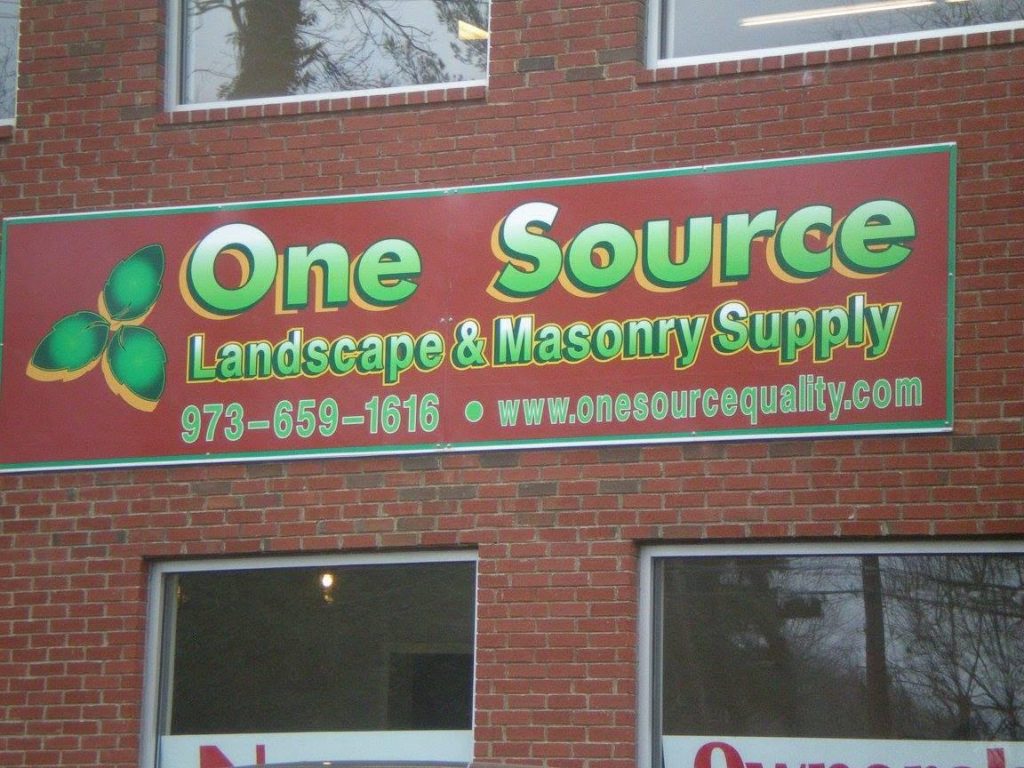
One Source Landscape & Masonry Supply building sign, lettered by Lombardo Lettering in Rockaway, NJ
One Source Landscape & Masonry Supply building sign — Rockaway, NJ
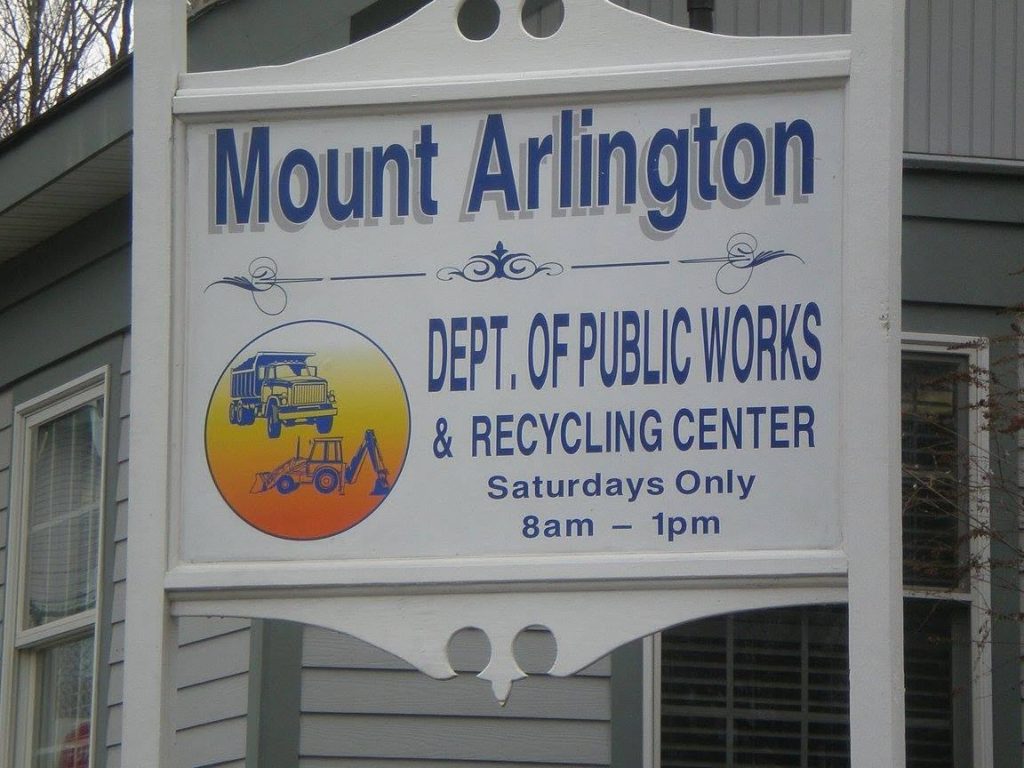
Mount Arlington Public Works sign, lettered by Lombardo Lettering in New Jersey
Mount Arlington Public Works sign — Lombardo Lettering
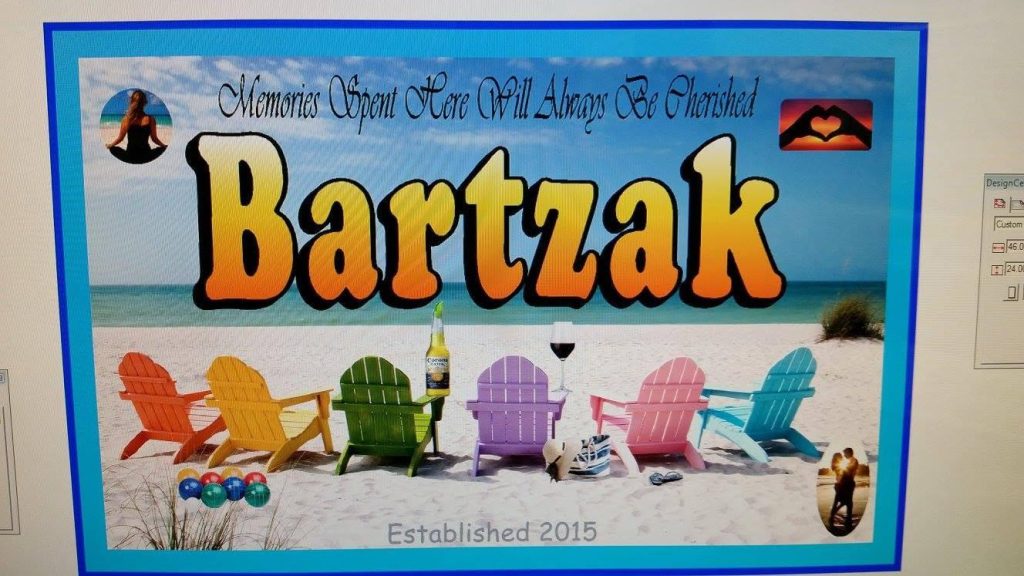
Bartzak custom sign, lettered by Lombardo Lettering in New Jersey
Bartzak custom sign — Lombardo Lettering

Sign substrates compared: aluminum composite, PVC and coroplast

The panel behind the lettering decides whether a sign stays flat and readable for years or curls after one summer. The figures below come from the manufacturers and distributors, not from us.

When the sign has to last outdoors, the vinyl on it matters as much as the panel. ORAFOL’s datasheet rates its intermediate calendered sign film, ORACAL 651, for vertical outdoor exposure at 6 years for colors, 4 years for metallics and 3 years for one blue, and points to its ORACAL 751 and 951 cast films for longer-term durability. Lombardo letters with premium cast films from Avery, 3M or Orafol rather than cheap calendared vinyl. The cast-versus-calendered comparison is covered in more detail on the truck lettering page.

Aluminum composite (DIBOND) for permanent exterior signs

Aluminum composite material is two thin aluminum skins bonded to a plastic core. 3A Composites describes DIBOND as two pre-painted sheets of .012 in aluminum bonded to a fire-rated polyethylene core, about half the weight of a solid aluminum sheet, and says it will not bow or oil-can and provides excellent durability in outdoor applications. It comes in 2 mm, 3 mm and 4 mm gauges, in sheet sizes that include 4×8 ft and 5×10 ft, and carries a Class A fire rating under ASTM E-84. That mix of flatness, light weight and outdoor durability is why it is a common choice for post-and-panel and building-mounted signs meant to stay up.

Expanded PVC (Sintra) for interiors and short-term outdoor use

SINTRA is a moderately expanded, closed-cell PVC sheet with a low-gloss satin finish. Its maker lists it for signage and displays, notes that it machines easily and takes digital and screen printing, and recommends gauges of 10 mm or thicker for exterior use. Distributor Laird Plastics describes it as designed primarily for interior use and suitable for short-term outdoor use, with limited outdoor UV resistance and a maximum service temperature of 140°F. That makes it a good lobby, office and hanging-sign material and a weaker choice for a permanent outdoor sign.

Coroplast for job-site and temporary signs

Coroplast is fluted polypropylene sheet. The manufacturer notes that polypropylene resists chemicals and that standard sheets are in most cases recyclable. It reports that regular white 4 mm sheet did not become brittle after 2,500 hours of SAE J1960 testing, which it equates to one year of outdoor exposure in Miami, and warns that plastics become brittle and crack under UV at rates that vary with local weather. That suits a construction board that comes down when the job closes, not a permanent sign.

New Jersey sign permits: zoning approval and the UCC construction permit

Two separate sets of rules apply to a business sign in New Jersey, and owners often only hear about one of them.

The first is local zoning. The Municipal Land Use Law lets each governing body adopt a zoning ordinance covering the nature and extent of the uses of land and of buildings and structures on it (N.J.S.A. 40:55D-62), and one of the law’s stated purposes is to promote a desirable visual environment (N.J.S.A. 40:55D-2(i)); both sections appear in the state’s published text of P.L. 2013, c. 106. Town sign ordinances are written under that zoning power, which is why allowed size, height, lighting and number of signs change from one town to the next. Sign codes also have a constitutional limit: in Reed v. Town of Gilbert (2015), the U.S. Supreme Court held that the content-based restrictions in an Arizona town’s sign code did not survive strict scrutiny.

The second is the state Uniform Construction Code. Under N.J.A.C. 5:23-2.14(a), it is unlawful to construct, alter or repair a structure without first obtaining the required construction permit. Subsection (b)6 exempts a sign from the construction permit only when all four of these are true:

  • It is supported by uprights or braces in or on the ground.
  • It is not served by an electrical circuit connected directly to the sign.
  • It is no larger than 25 square feet in surface area, one side.
  • It is mounted no more than six feet above the ground.

What the exemption does and does not cover

If any answer is no, because the sign is lit by a direct circuit, larger or mounted higher, the construction permit process applies. An exempt sign still needs whatever approval the town’s zoning code requires, and the construction official can still require removal or correction of a sign that creates an unsafe condition. Permit signs can also need engineered drawings: East Windsor Township’s sign permit instructions say signs requiring construction permits must have plans signed and sealed by a New Jersey licensed architect or engineer, with structural, adhesion and fastening details, and ask every applicant for a colored rendering or sketch with all dimensions and colors and, for a freestanding sign, a plot plan.

How sign ordinances differ between towns in our service area

Two Morris County towns show how much the rules can change. Always get the current ordinance from your town before ordering; these are examples, not a substitute for the zoning office.

  • Find your town’s rules: start from the service areas list or your county page, such as Morris County.
  • Ask the zoning office for the maximum sign area, height, setback and lighting rules for your zone.
  • Bring those numbers when you request a quote so the design starts at the allowed size.

Chester Township: exterior lighting only, and lights off overnight

Chester Township’s land use code exempts a few small signs from permits, including nameplate or identification signs of 2 square feet or less, sale or rental signs of 4 square feet or less and temporary signs on private property, and requires a permit from the zoning official for all other signs. Signs may be lit only from the exterior by stationary, shielded light aimed solely at the sign; internally illuminated signs and neon or other gas-filled tubing are not permitted, and no sign may be lit between 10 p.m. and 6 a.m. See the Chester service area page.

Morristown: detailed rules for sidewalk A-frames

Morristown’s Ordinance O-42-2018 allows one freestanding A-frame or sandwich-board sign per business in its MX-2 and TC zones and overlays. The sign must be two-sided and not lit, no more than 8 square feet per side and no more than 2 ft wide or 4 ft tall, placed within 2 ft of a structure or immovable object, with at least 10 ft of paved sidewalk left for pedestrians and kept 10 ft from a crosswalk or intersection. It may be out only while the business is open and must come in during bad weather. Allowed materials are metal, finished wood, chalkboard, whiteboard or plastic; paper, fiberboard, foam core, corrugated paper and unfinished wood are prohibited. The ordinance also requires a zoning permit and proof of insurance. Confirm the current text with the town. See the Morristown service area page.

Interior signs: ADA room signs and OSHA safety sign colors

Inside a building, two federal rule sets shape what a sign has to look like.

Under the 2010 ADA Standards, signs that identify permanent rooms and spaces, such as restrooms and room or suite numbers, must be tactile: raised uppercase sans-serif characters 5/8 in to 2 in high and at least 1/32 in deep, repeated in Grade 2 braille. The tactile characters sit between 48 in (baseline of the lowest line) and 60 in (baseline of the highest line) above the floor, and at a single door the sign goes on the latch side. Directional and informational signs must meet the visual requirements but do not have to be tactile.

OSHA 29 CFR 1910.145 sets the classes and colors of workplace safety signs: danger signs, in red, black and white, mark immediate danger; caution signs, with a yellow background and a black panel with yellow letters, warn of potential hazards; and safety instruction signs, with a white background and a green panel with white letters, give general safety instructions.

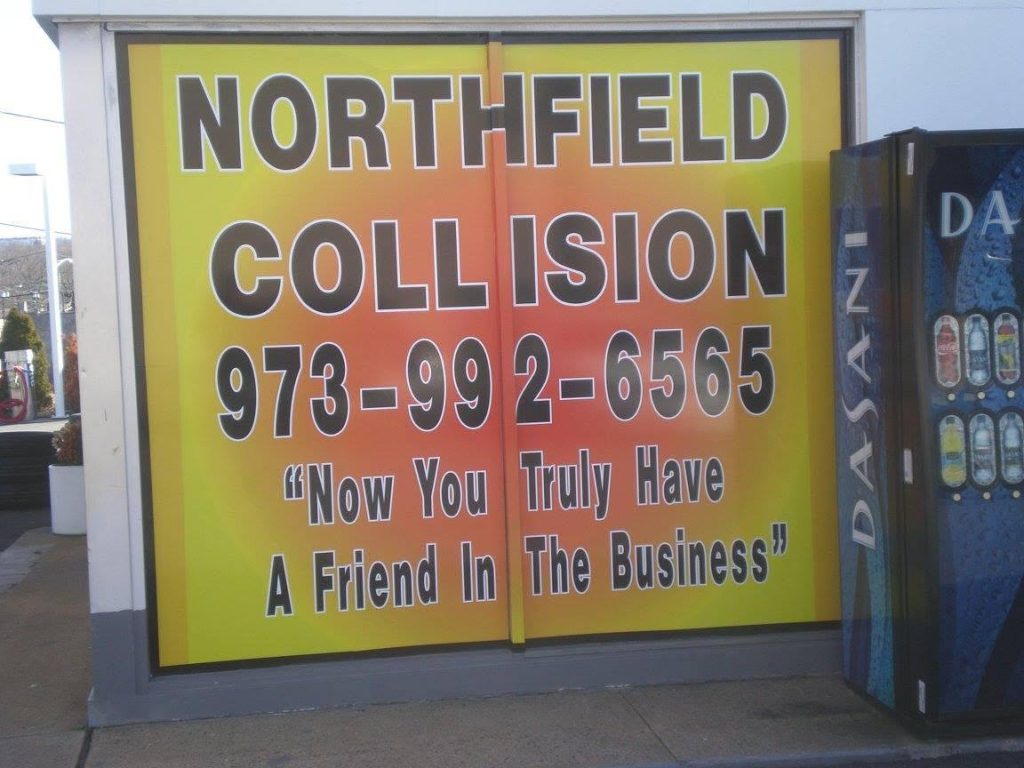
Northfield Collision window graphics, lettered by Lombardo Lettering in New Jersey
Northfield Collision window graphics — Lombardo Lettering

Why Lombardo

Custom signs, done at your yard

We bring the shop to you, so your vehicle keeps working while we do the job. Call Frank for a straight answer, or send a photo and we will reply with a price.

  • Talk to Frank directly — most quotes take one phone call
  • Priced from a photo of your vehicle or space
  • Three generations of sign work, since 1940

Installing post-and-panel and wall-mounted signs: 811, footings and mounting height

Lombardo letters and installs on site, at your yard, driveway or job site, rather than asking you to drop anything off.

Any sign set on posts in the ground means digging. The New Jersey Board of Public Utilities says anyone who plans to dig must give at least three business days’ notice by calling 811, and that hand digging must be used within two feet on either side of the utility markings. Stafford Township’s call-before-you-dig guidance lists a sign post among the small projects that need a call, and says to call no more than 10 business days ahead.

Mounting height is also a permit question. A ground sign mounted no more than six feet above the ground stays inside the UCC exemption if it also meets the other three tests; raise it for visibility over parked cars and it may need a construction permit. On a wall, the fasteners have to suit the facade, and a sign that needs a construction permit may need its fastening details on sealed drawings.

Re-facing an existing sign versus building a new one

Putting a new face or new lettering on an existing permitted sign changes less than building a new one, but under the UCC altering or repairing a structure can still call for a permit, so ask the zoning and construction offices before you order. Do not count on an old approval carrying over: Morristown’s A-frame rules, for example, require a new zoning permit after a change in ownership and allow no grandfathering. When old lettering has to come off first, see decal removal.

Signs rarely stand alone. Glass storefronts and doors are covered under window and wall vinyl lettering; temporary promotions and grand openings often suit banners; and a sign, truck and shirt that match can share one set of artwork through graphic design, truck lettering, fleet lettering and shirts and apparel.

Choosing the right sign and getting a quote from Lombardo Lettering

Match the material to how long the sign has to last. Coroplast suits a board that leaves with the job, PVC suits interiors and short outdoor use, and aluminum composite suits a permanent exterior panel. Then size the sign to your town’s limits rather than to the largest panel available.

Lombardo Lettering is a family-owned business founded in 1940 by Frank Lombardo Sr., an army veteran who painted signs, pinstripes and murals. Frank Lombardo Jr. took over and moved the business into cut vinyl, printed wraps and adhesive graphics, and Tristan Lombardo, the third generation, works alongside his father. The shop is at 95 W Main St in Chester, off Route 206 and Route 24, with visits by appointment, and the work covers Morris, Essex, Warren, Union, Bergen, Somerset, Sussex and Hunterdon counties.

To start, call 973-214-2292 and ask for Frank, email franksignguy@yahoo.com, or request a quote. Have the wording, a logo file if you have one, the location, the sign type you want and your town’s size limits ready. You can see past work in the gallery and read more about the family.

Our work, up close

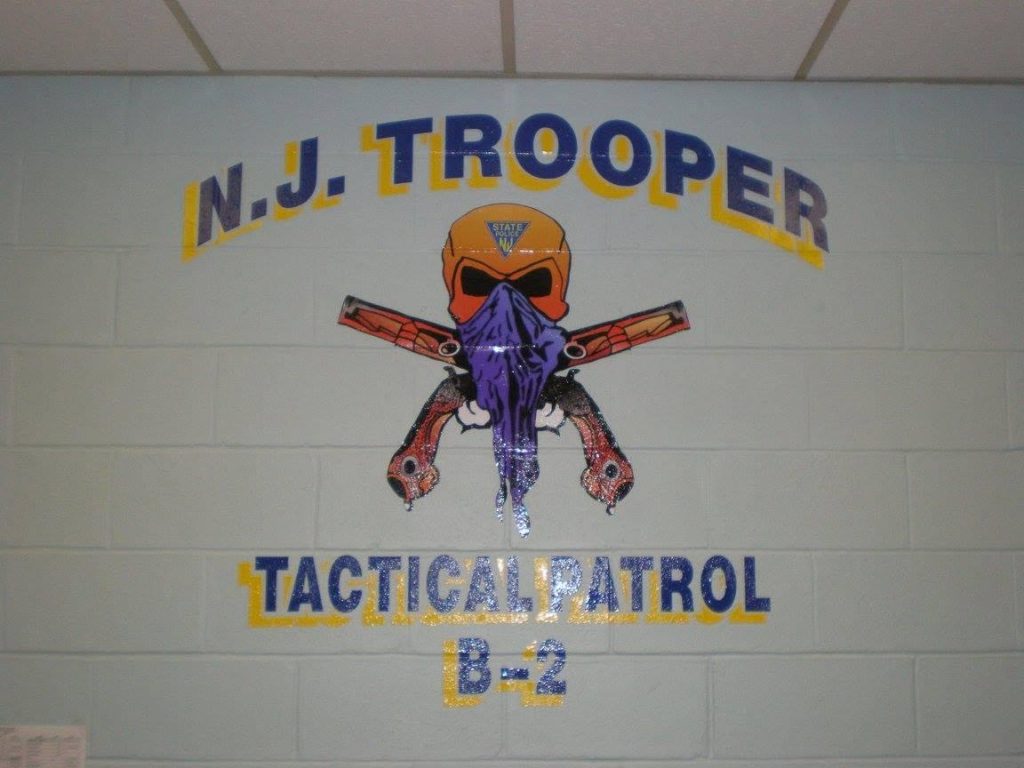
NJ Trooper Tactical Patrol wall graphic, lettered by Lombardo Lettering in New Jersey
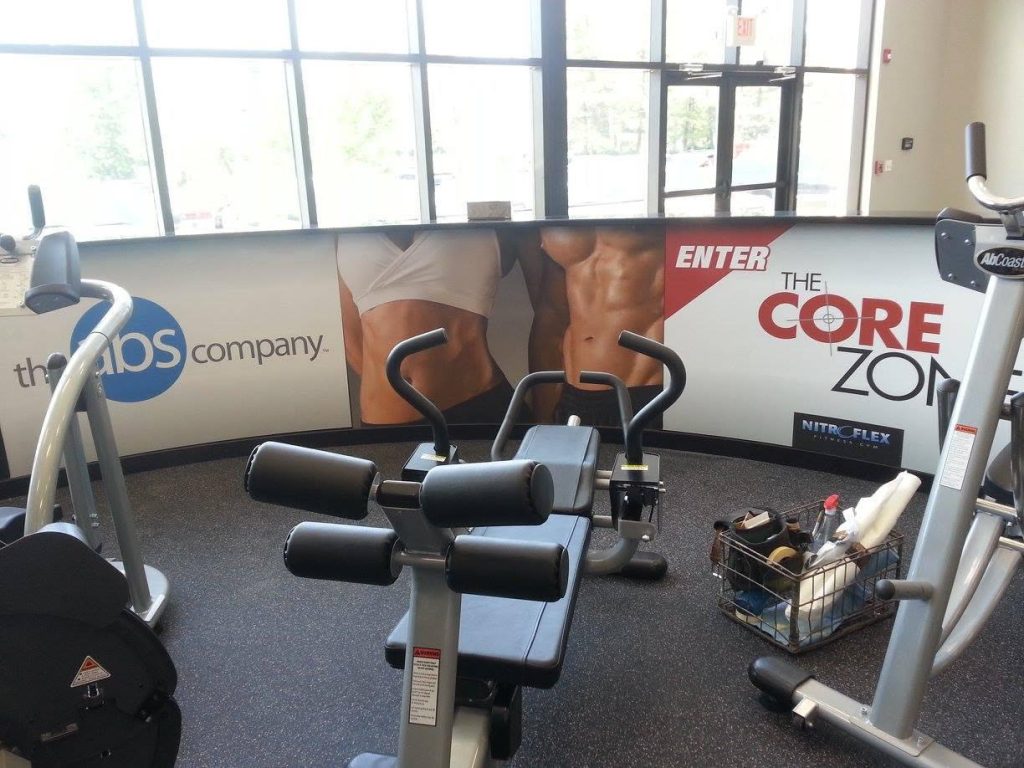
Interior fitness-center wall graphics, lettered by Lombardo Lettering in New Jersey
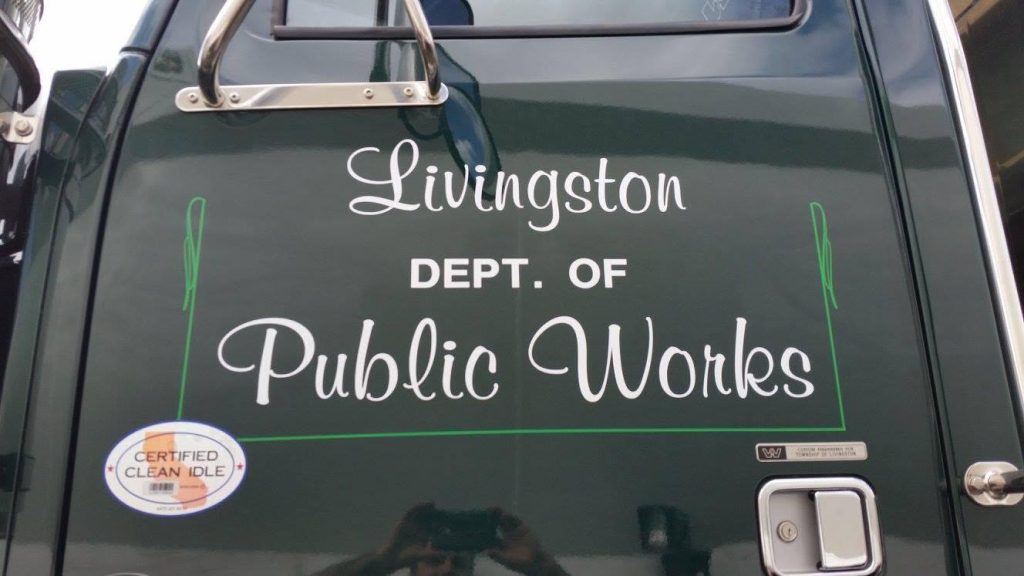
Livingston Public Works truck door, lettered by Lombardo Lettering in Livingston, NJ
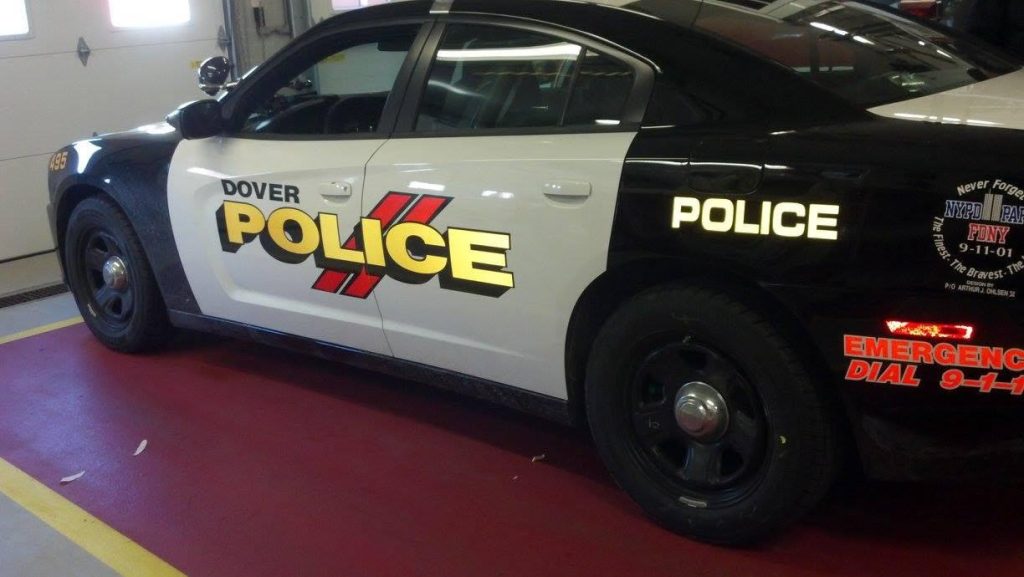
Dover Police vehicle graphics, lettered by Lombardo Lettering in Dover, NJ
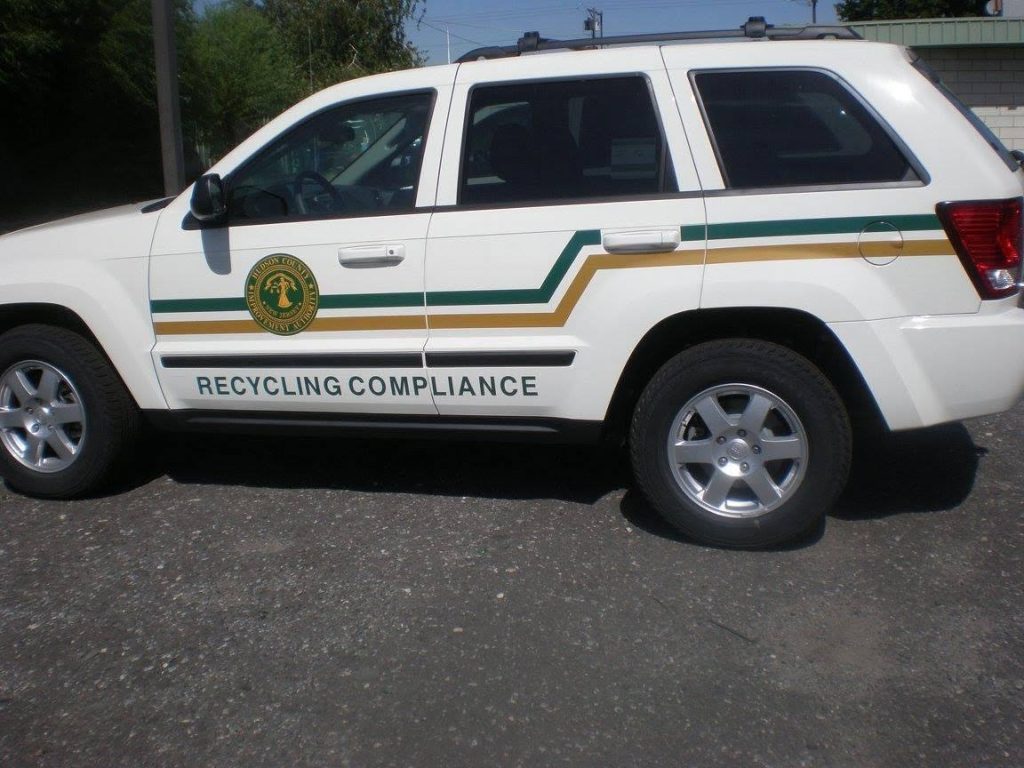
Recycling compliance vehicle graphics, lettered by Lombardo Lettering in New Jersey

Custom sign questions

Do I need a permit for a business sign in New Jersey?

Usually you need zoning approval from your town, and sometimes a UCC construction permit as well. N.J.A.C. 5:23-2.14(b)6 waives the state construction permit only for a ground-supported sign with no direct electrical circuit, 25 square feet or less on one side, mounted no more than six feet above the ground. Your town’s sign ordinance still applies to exempt signs.

What is the best material for an outdoor business sign?

For a permanent exterior sign, aluminum composite such as DIBOND is a common choice: its maker describes it as flat, about half the weight of solid aluminum sheet and durable outdoors. Expanded PVC is mainly an interior material with limited outdoor UV resistance, and coroplast suits temporary signs. The vinyl on the panel should also be rated for outdoor exposure.

How long does a coroplast job-site sign last outside?

It depends on sun and weather. Coroplast’s manufacturer reports that white 4 mm sheet did not turn brittle after 2,500 hours of SAE J1960 testing, which it equates to one year outdoors in Miami, and notes that UV makes plastics brittle over time. That makes coroplast a fit for a construction board that comes down when the project ends, not a permanent sign.

Do I have to call 811 before installing a post sign?

Yes. The New Jersey Board of Public Utilities requires anyone planning to dig to call 811 at least three business days ahead, and hand digging within two feet on either side of the markings. Stafford Township’s guidance names sign posts among projects that need a call and says to call no more than 10 business days ahead.

Can I put an A-frame sign on the sidewalk in front of my shop?

Only if your town allows it, and the rules can be specific. Morristown’s Ordinance O-42-2018, for example, allows one two-sided, unlit A-frame per business in certain downtown zones, up to 2 ft wide and 4 ft tall, out only while the business is open, with 10 ft of sidewalk kept clear, plus a zoning permit and proof of insurance. Check your own town’s current ordinance first.

Can my sign be lit at night?

That is set by your town. Chester Township, for instance, permits only stationary, shielded exterior lighting aimed at the sign, does not permit internally lit signs or neon, and bans sign lighting from 10 p.m. to 6 a.m. Under the state construction code, a sign served by a directly connected electrical circuit does not qualify for the sign permit exemption.

Do office suite and restroom signs need braille?

Signs that identify permanent rooms and spaces do. The 2010 ADA Standards require raised uppercase sans-serif characters 5/8 in to 2 in high with Grade 2 braille, mounted between 48 and 60 in above the floor to the character baselines, on the latch side of a single door. Directional and informational signs do not need to be tactile but must meet the visual requirements.

What should I have ready when I ask for a sign quote?

The exact wording, your logo file if you have one, where the sign will go (post, wall, window or sidewalk), whether it is permanent or temporary, and your town’s size, height and lighting limits for your zone. A photo of the location helps. Call 973-214-2292 and ask for Frank, email franksignguy@yahoo.com, or use the quote form.

Ready for a quote?

Call 973-214-2292 and talk to Frank directly.

Areas we serve across New Jersey

Eight counties. Pick yours to see the towns we cover. Mobile truck lettering, wraps and signs — we come to your yard.

Find us in Chester, NJ

Our shop is at 95 W Main Street, Chester, New Jersey 07930 — but for lettering and wraps, we come to you.

Get directions to the shop →

Our mobile service area

Eight counties across northern and western New Jersey, covered by our own trucks.

See every county and town we cover →