Service
Fleet lettering and fleet graphics in New Jersey
One written spec for every body type you run, so the truck you add next year matches the one lettered today.
A fleet lettering program puts every vehicle you run on one written specification: layout, typeface, letter heights, film brand and color code, unit-number position and legal markings, set per body type. Lombardo Lettering proofs each layout on a template of your actual vehicle before anything is cut, then letters the fleet at your yard in eight New Jersey counties.
What a fleet lettering program covers beyond lettering one truck
Lettering a single pickup is a design job. Running fleet graphics is a records job. The questions change from “what should the door say” to “how do we make the ninth van match the first, who decides where unit 14’s number goes, and what happens to the graphics when a truck goes to auction.”
A program answers those questions once, in writing, and then applies the answers to every vehicle as it comes into service and again when it leaves. It covers five stages: setting the standard for each vehicle type, numbering units, adding vehicles, keeping color and film consistent across model years, and stripping graphics at resale or lease return. Compliance runs through all five, because the legal markings on a 12-truck fleet are not always the same as on a 60-truck fleet.
If you have one or two vehicles and no plans to add more, start with truck lettering, which covers panel placement, legibility and film basics for individual pickups, vans and box trucks. This page picks up where several vehicles have to look and read like one company.
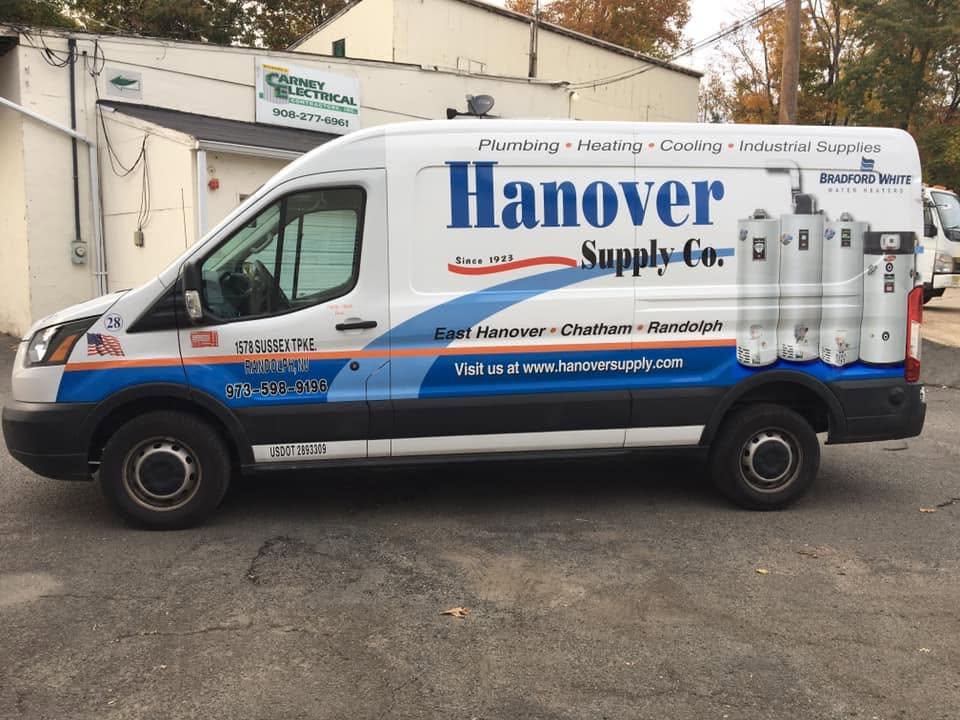
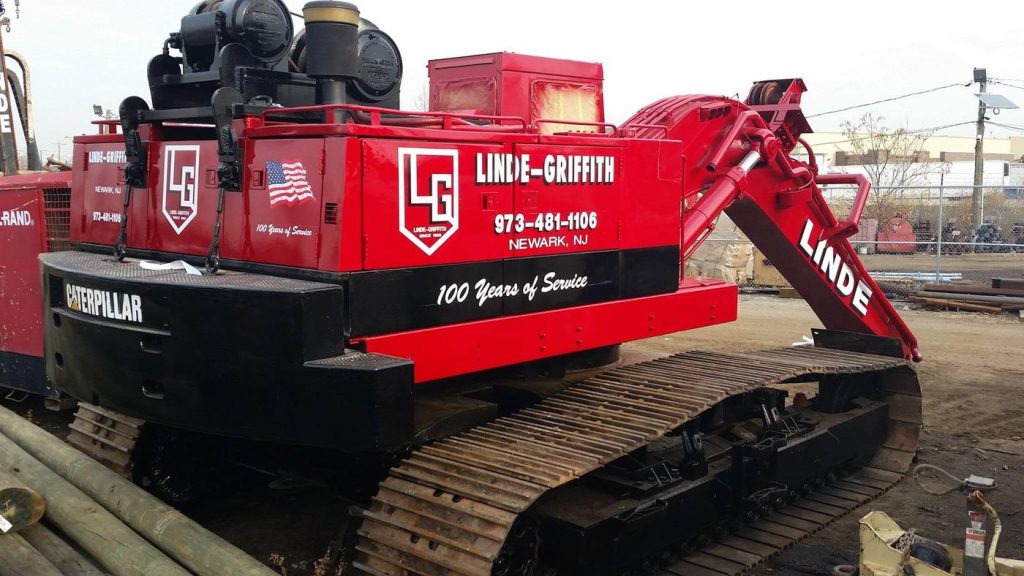
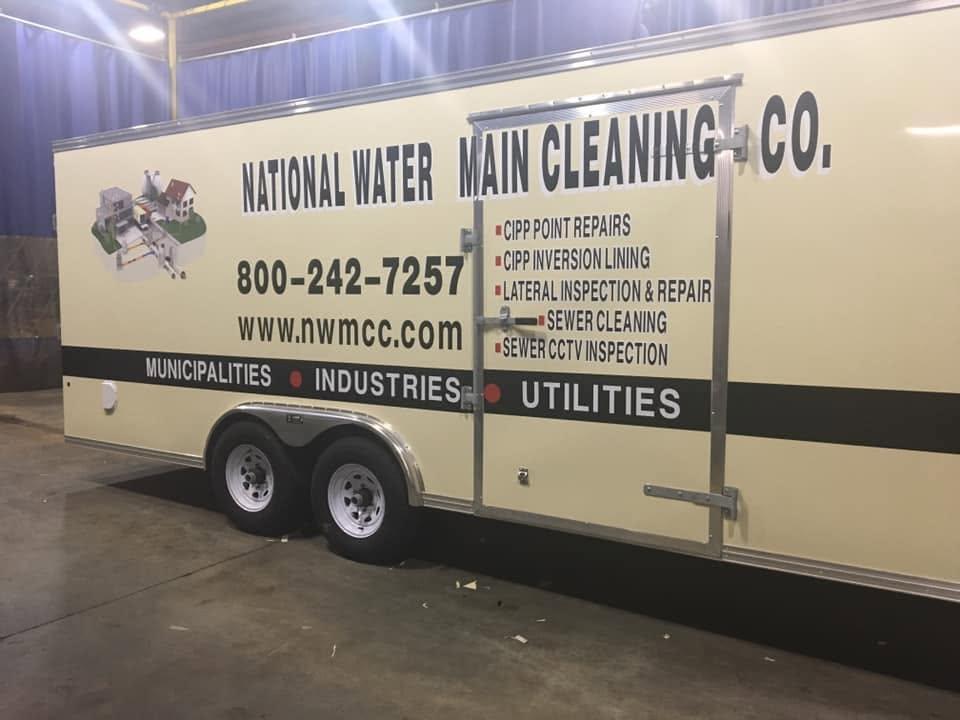
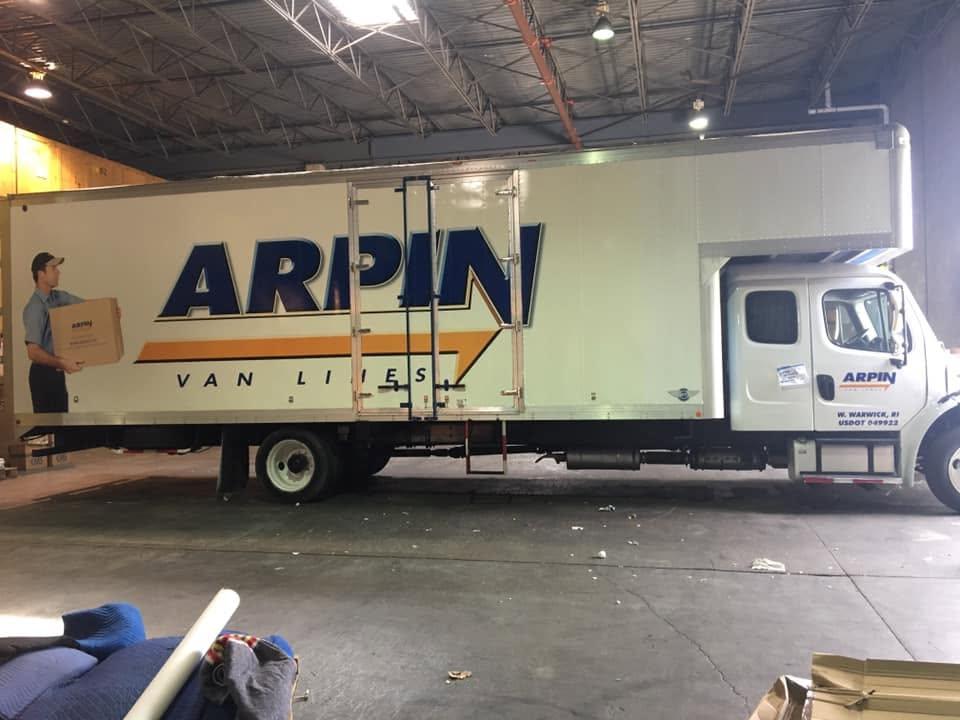
Recent fleet lettering work across New Jersey
The fleet spec sheet: what to record for each vehicle type
Matching truck #12 to truck #1 years later fails for one reason: nobody wrote down what truck #1 actually got. “Navy blue, about this big, roughly centered on the door” cannot be reproduced. A spec sheet can. Lombardo lays out each body type on a template of your actual vehicle and you approve the proof before anything is cut. Keep the approved proof and the spec together, and keep your own copy.
- Body type and model years covered, for example a 148-inch-wheelbase high-roof van, a crew-cab pickup, a 16-foot box truck.
- The approved layout for each side, the rear and the hood if used.
- Typeface names and letter heights for every line, including the legal identification lines.
- Offsets measured from fixed points: panel lines, door handles, wheel arches or the top edge of the box, not from “the middle of the door.”
- Unit-number position, height and color.
- Film brand, product line and exact color code, such as a 3M Scotchcal 7125 or ORACAL 751C color number, never a color name.
- Which legal blocks this body type carries and which it does not, such as GVWR only on units at 26,001 lb or more.
One template per body type, not one design for the whole fleet
A layout drawn for a pickup door will not fit a van’s sliding door or a box truck’s cab. The fleet shares a design language (logo, typeface, colors, order of information) while each body type gets its own measured layout.
Color codes and batch numbers keep model years matching
Brand and color code are what make a 2027 truck match a 2024 truck. ORAFOL’s datasheet for ORACAL 751C states that batch traceability under ISO 9001 is possible from the roll number, so recording roll numbers alongside the color code gives you a way to trace a shade question back to its source. ORACAL 751C comes in 81 colors and ORACAL 951 in 154, so a close match to most brand colors is usually available in stock cast film. Lombardo uses premium cast films from Avery, 3M or Orafol and does not use cheap calendared vinyl, which keeps the material side of the spec stable from truck to truck.
Unit numbering systems for vans, trucks and trailers
Unit numbers serve dispatch, the mechanic and the fuel log. They need to be large, consistent and in the same place on every vehicle of a type, usually on both sides and the rear.
Pick a scheme that survives growth. A flat sequence (101, 102, 103) is simple. A coded scheme puts meaning into the first digit, for example 100s for vans, 200s for pickups, 300s for box trucks and 500s for trailers, so a number alone tells you the vehicle class. Whatever you choose, decide up front whether retired numbers are reused, because a reused number on a truck with different equipment confuses maintenance records.
Keep unit numbers visually separate from the legal identification. A unit number is not a USDOT number or a corporate ID number, and placing it in the same block with the same size and color invites a roadside reader to mistake one for the other. Under 49 CFR 390.21T(b)(4), other identifying information may be displayed on a commercial motor vehicle if it is not inconsistent with the required marking, and keeping the unit number visibly separate helps avoid that confusion.
Fleet compliance: the 50-vehicle rule, mixed weights and leased units
The basic New Jersey rule for name, municipality and three-inch letters is covered on our truck lettering and NJ vehicle lettering law pages. Fleets run into three issues single-truck owners rarely meet. The summaries below come from the statute and federal regulations; for your specific operation, confirm with the agency or your attorney.
The corporate ID number option at 50 commercial vehicles
Under N.J.S.A. 39:4-46(a), operators of fleets of 50 or more commercial vehicles, and franchised public utilities, are exempt from displaying the municipality name if their vehicles display a corporate identification number. The owner, lessee or lessor name is still required, in plain view and at least three inches high. A franchised public utility here means a public utility under R.S. 48:2-13 with a service territory approved by the Board of Public Utilities. For a growing fleet, the legal block can change format partway through a rollout. Build the spec so the municipality line and a corporate ID line occupy the same reserved space, and the switch is a one-line change rather than a redesign.
GVWR blocks only where the weight class requires them
N.J.S.A. 39:4-46(b) requires every commercial motor vehicle with a GVWR or GCWR of 26,001 lb or more that is registered or principally garaged in New Jersey to display its GVWR. GVWR here is the manufacturer’s maximum loaded weight or the registered gross weight, whichever is greater. Knowingly displaying a lower figure carries a fine of up to $5,000, up to 90 days in jail, or both, for each offense. In a mixed fleet of vans, pickups and heavy straight trucks, the GVWR block belongs in the spec only for the heavy units, and each one should carry its own correct figure rather than a copied number.
Leased, rented and "operated by" vehicles
Federal marking rules have provisions that only matter once a fleet mixes owned and outside equipment. Under 49 CFR 390.21T(b)(3), if the name of anyone other than the operating carrier appears on the vehicle, the operating carrier’s name and USDOT number must follow, preceded by the words “operated by.” Under 390.21T(e), a carrier renting a vehicle for 30 calendar days or less may display the lessor’s name and USDOT number instead of its own, provided the rental agreement contains the renting carrier’s details and is carried on the vehicle for the full rental term.
For leased equipment, 49 CFR 376.11(c) requires the carrier to identify the equipment as being in its service during the lease, following the Part 390 rules. 49 CFR 376.12(e) requires the lease to state who is responsible for removing identification devices when the lease ends, and under 376.12(f) the lease may make the lessor’s final payment conditional on removing and returning those identification devices. Under 390.21T(d), the marking may be painted on or be a removable device, as long as it meets the identification and legibility requirements of 390.21T(c), which include appearing on both sides of the vehicle and being legible from 50 feet in daylight.
Trailers, curtain-siders and stainless in a mixed fleet
Trailers bring a federal safety marking that the lettering layout must work around rather than over. Under 49 CFR 393.11(b), trailers 80 inches or wider with a GVWR over 10,000 lb, manufactured on or after December 1, 1993, need a conspicuity system meeting FMVSS No. 108, using retroreflective sheeting, reflex reflectors or both. Pole trailers and trailers built only for living or office use are excepted.
3M’s DOT-C2 guidance describes the layout. On the sides, alternating red and white sheeting runs as horizontal as practicable, centered between 375 mm and 1,525 mm above the road at curb weight, covering at least half the trailer length; it need not be continuous. At the rear, a horizontal red and white line as close to full width as practicable, plus two pairs of 300 mm white strips at the upper left and right corners. On truck tractors, two red and white strips at least 600 mm long on the rear fenders, mudflaps or mudflap brackets. Where rivet heads are in the way, 3M allows DOT-C2 to be split into two 25 mm strips of the same length and color, no more than 25 mm apart. The fleet spec should mark that band as reserved so no lettering ever covers it.
Two surfaces belong on the exclusion list. 3M’s trailer bulletin does not recommend applying any graphics to soft-sided or curtain trailers, because adhesion drops significantly over time and the graphics curl and fall off. On a tractor-trailer combination, N.J.S.A. 39:4-46(a) is satisfied when either unit carries the required identification, so the tractor can carry it. 3M also says reflective films should not go directly on stainless steel, because the graphic could deteriorate early during maintenance. Where a painted trailer has a ceramic coating, 3M recommends removing it mechanically rather than chemically, because the alkaline chemicals are likely to damage the trailer’s paint, and to let graphics bond at least 24 hours before the trailer goes back into service.
Why Lombardo
Fleet lettering, done at your yard
We bring the shop to you, so your vehicle keeps working while we do the job. Call Frank for a straight answer, or send a photo and we will reply with a price.
- Mobile — we come to your yard or job site
- Premium Avery, 3M or Orafol cast film
- Layout proofed on your vehicle before anything is cut
Adding vehicles: cut from the spec, do not stockpile decals
A box of pre-cut spare door sets looks like a shortcut and usually is not. Vinyl film has a limited shelf life. 3M states that Scotchcal 7125 has a shelf life of no more than three years from manufacture, and once the film is processed (cut), that changes to one year from the processing date, and never later than three years from manufacture, with storage at 40 to 100°F out of sunlight in the original container. ORACAL 751C lists a two-year shelf life at 68°F and 50% relative humidity, and Avery Dennison lists two years from manufacture for SC 900 when stored at 68 to 77°F. A set cut for a truck that arrives 18 months later may be past its date before it touches the panel.
The better approach is to cut each new vehicle’s graphics from the written spec when the vehicle is in hand. That also picks up changes a stockpile misses, such as a new body style, a new phone number or a switch to a corporate ID number. Lombardo proofs the layout on a template of the new vehicle before anything is cut, so the match is checked on paper first.
Rebranding works the same way. Update the spec once, then decide with the owner whether vehicles change all at once or as each one comes due, which is a budget decision rather than a technical one.
Retiring vehicles: removal at resale, lease return and municipal surplus
A truck leaving the fleet still carries your name, phone number and in some cases your USDOT number. For leased equipment, the federal lease rules above make the question of who strips the carrier’s identification a contract term, so treat removal as a compliance step, not a cosmetic one. Lombardo handles clean removal of old graphics, and decal removal covers that work on its own.
Public fleets have an added rule. New Jersey bill A-856, signed into law in January 2018, extends to county and municipal police cars and emergency vehicles the requirement to remove equipment such as sirens and strobe lights, and markings such as state, county or municipal seals, before the vehicle is sold or transferred. Sales or transfers to government agencies, law enforcement or fire services, volunteer fire companies, volunteer first aid squads, authorized emergency vehicle dealers and non-governmental emergency service providers are exempt. Municipal garages should confirm the current statute text with their counsel before setting a surplus procedure.
Film choice affects the exit too. 3M classifies the adhesive on Scotchcal 7125 cut film as not removable and makes no claims about removal speed, while 3M states that its IJ180mC print wrap films can be removed with the aid of heat and/or chemicals, referring to its removal instruction bulletin. Plan removal as its own stage in the vehicle’s life, not a quick peel.
Choosing a fleet approach and requesting a fleet quote
Most fleets do not need full wraps. Cut lettering on the factory paint carries the name, trade, phone, unit number and legal blocks, and Lombardo will not upsell a full wrap when lettering would do. A vehicle wrap earns its place when you want one body color across trucks bought in different colors, or printed imagery on a flagship vehicle; the fleet spec can include both, with wrapped and lettered units sharing the same logo, typeface and color codes. If the logo itself needs work before it goes on 20 trucks, start with graphic design, and carry the same artwork to custom signs and shirts and apparel.
Lombardo Lettering is a family business founded in 1940 by Frank Lombardo Sr., who painted signs, pinstripes and murals. Frank Lombardo Jr. moved the work into cut vinyl, printed wraps and adhesive graphics, and Tristan Lombardo, the third generation, works alongside his father. All fleet work is mobile: they letter at your yard, municipal garage or job site, and there is no shop drop-off.
To start a fleet quote, call Frank at 973-214-2292, email franksignguy@yahoo.com or use the quote form. Include the number of vehicles by body type, the model years, a photo of your current lettering, where the vehicles are garaged and whether any units are leased, rented or over 26,001 lb GVWR. Shop visits at 95 W Main St in Chester are by appointment. Coverage runs across Morris, Essex, Warren, Union, Bergen, Somerset, Sussex and Hunterdon counties; see all service areas.
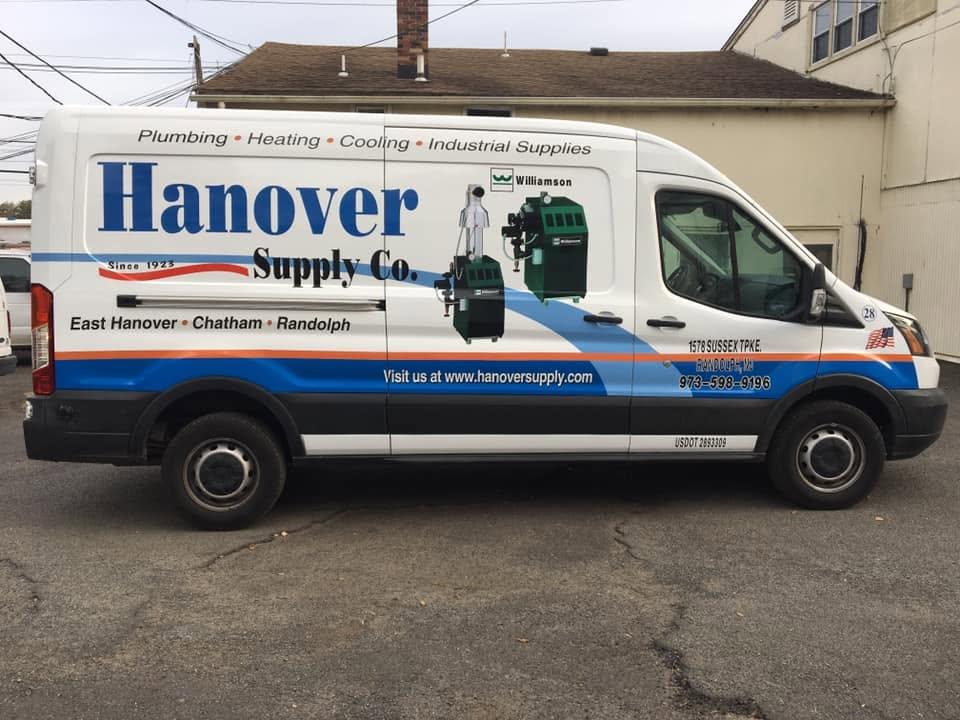
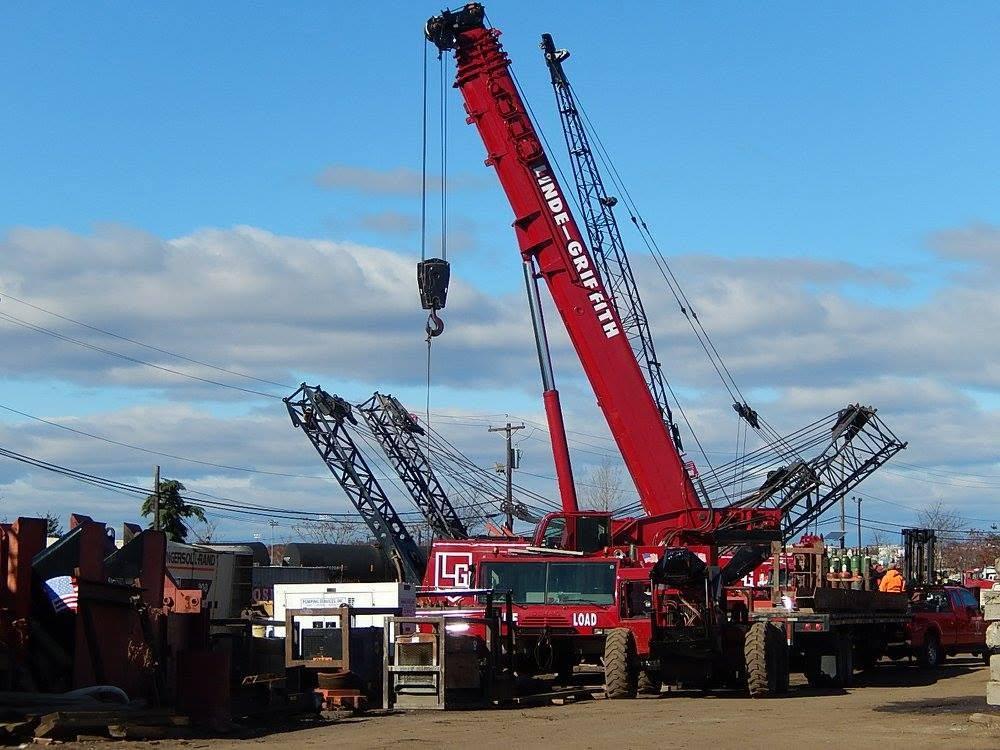
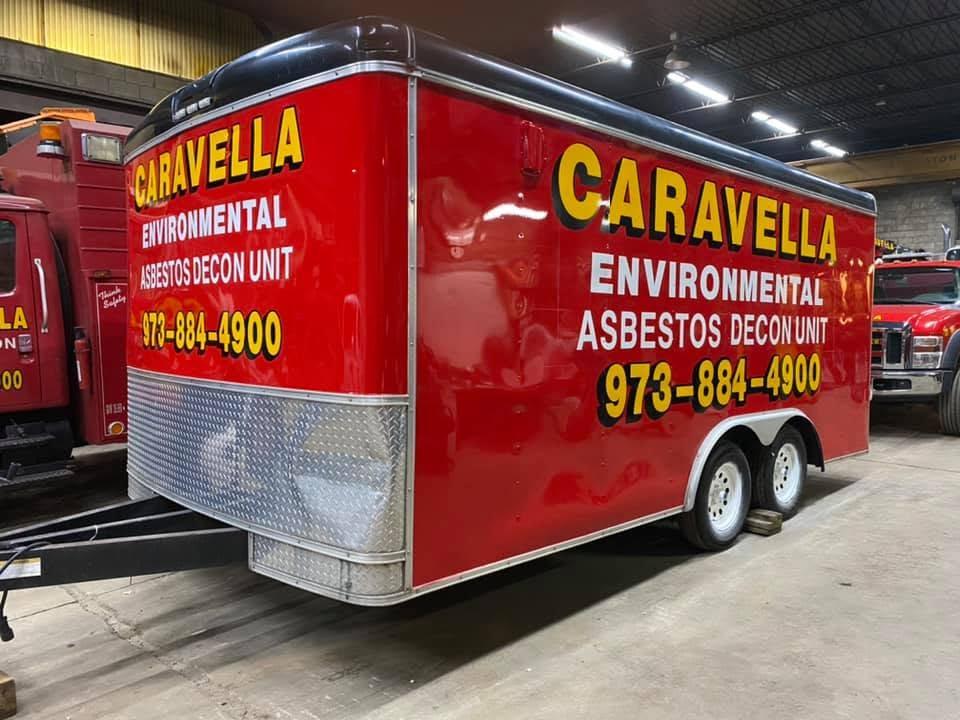
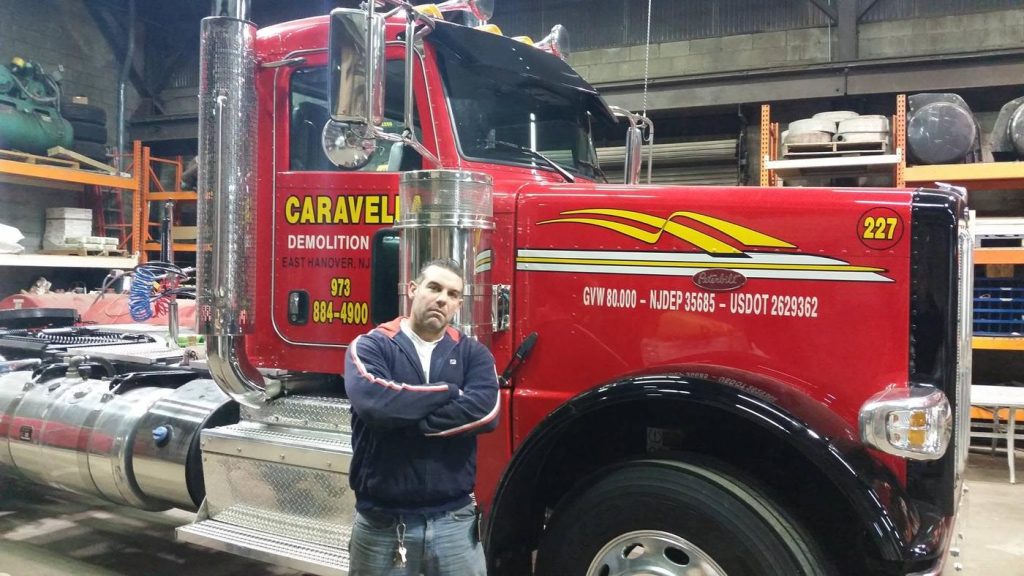
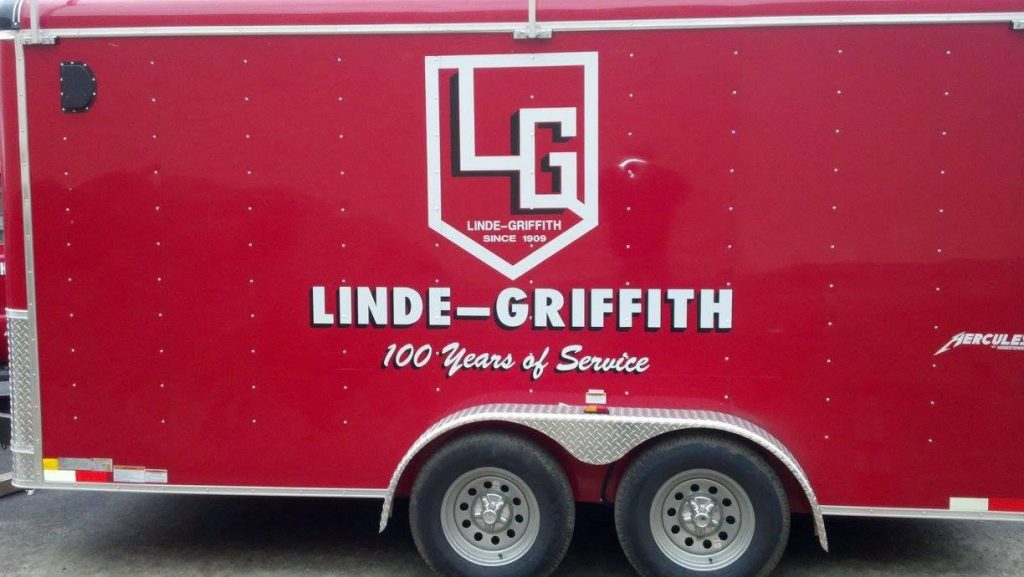
Our work, up close
Fleet lettering questions
What should a fleet lettering spec include?
For each body type: the approved layout for every side, typefaces and letter heights, offsets measured from panel lines or handles, unit-number position, the film brand and exact color code, and which legal blocks that vehicle carries. Recording color codes rather than color names, and ORAFOL roll numbers where used, is what lets a truck added years later match the original.
Can a New Jersey fleet show a corporate ID number instead of the town name?
Yes, once the fleet reaches 50 or more commercial vehicles, or if the operator is a BPU-franchised public utility. N.J.S.A. 39:4-46(a) exempts those operators from displaying the municipality name if the vehicles display a corporate identification number. The owner, lessee or lessor name is still required, in plain view and at least three inches high.
Does every truck in a mixed fleet need a GVWR marking?
No. N.J.S.A. 39:4-46(b) applies to commercial motor vehicles with a GVWR or GCWR of 26,001 lb or more that are registered or principally garaged in New Jersey. Vans and lighter trucks below that line do not need it. Each heavy unit should carry its own correct figure, because knowingly displaying a lower GVWR can bring a fine of up to $5,000, up to 90 days in jail, or both.
Should we keep spare pre-cut decals for new trucks?
Generally no. 3M gives Scotchcal 7125 a shelf life of no more than three years from manufacture, cut to one year once the film is processed. ORACAL 751C and Avery SC 900 list two years. Cutting each new vehicle’s graphics from the written spec when the truck arrives avoids aged film and picks up any wording or legal changes made since.
What marking does a rented or leased truck need?
Under 49 CFR 390.21T(e), a carrier renting a vehicle for 30 days or less may display the lessor’s name and USDOT number if the rental agreement contains the renting carrier’s details and is carried on the vehicle for the full term. If someone else’s name is on the truck otherwise, the operating carrier’s name and USDOT number must follow, preceded by “operated by.” Leases must say who removes the carrier’s identification at the end.
Can you letter curtain-side trailers?
3M does not recommend applying any graphics to soft-sided or curtain trailers, because adhesion drops over time and the graphics curl and fall off. Under N.J.S.A. 39:4-46(a), either unit of a two-vehicle combination can carry the required identification, so put it on the tractor. Hard-sided trailers can be lettered around the red and white DOT-C2 conspicuity band required on trailers 80 inches or wider with a GVWR over 10,000 lb built since December 1, 1993.
Do you have to bring fleet vehicles to the shop?
No. Lombardo Lettering is mobile and letters at your yard, driveway, job site or municipal garage across Morris, Essex, Warren, Union, Bergen, Somerset, Sussex and Hunterdon counties. There is no shop drop-off. The shop at 95 W Main St in Chester is open for visits by appointment.
What happens to the graphics when we sell a truck?
They should come off before the truck leaves, so a buyer is not driving around under your name or USDOT number. Lombardo handles clean removal of old graphics. For leased equipment, 49 CFR 376.12(e) requires the lease to say who removes the carrier’s identification, and New Jersey requires seals and other markings to come off used county and municipal police cars and emergency vehicles before most sales or transfers.
Ready for a quote?
Call 973-214-2292 and talk to Frank directly.
Areas we serve across New Jersey
Eight counties. Pick yours to see the towns we cover. Mobile truck lettering, wraps and signs — we come to your yard.
Find us in Chester, NJ
Our shop is at 95 W Main Street, Chester, New Jersey 07930 — but for lettering and wraps, we come to you.
Our mobile service area
Eight counties across northern and western New Jersey, covered by our own trucks.